Half the people who walk into our shop did not come to Gili Air to dive. They came because someone told them you can float over a sea turtle here before breakfast — and that part is true. The reef starts a few fin-kicks from the sand, the water sits around 28°C all year, and green and hawksbill turtles graze the reef flats of all three islands every single day.
We are a dive centre, so this guide has an obvious ending. But snorkeling the Gilis is genuinely world-class, it costs almost nothing, and it deserves an honest local guide of its own. Here it is.
Snorkeling straight off the beach
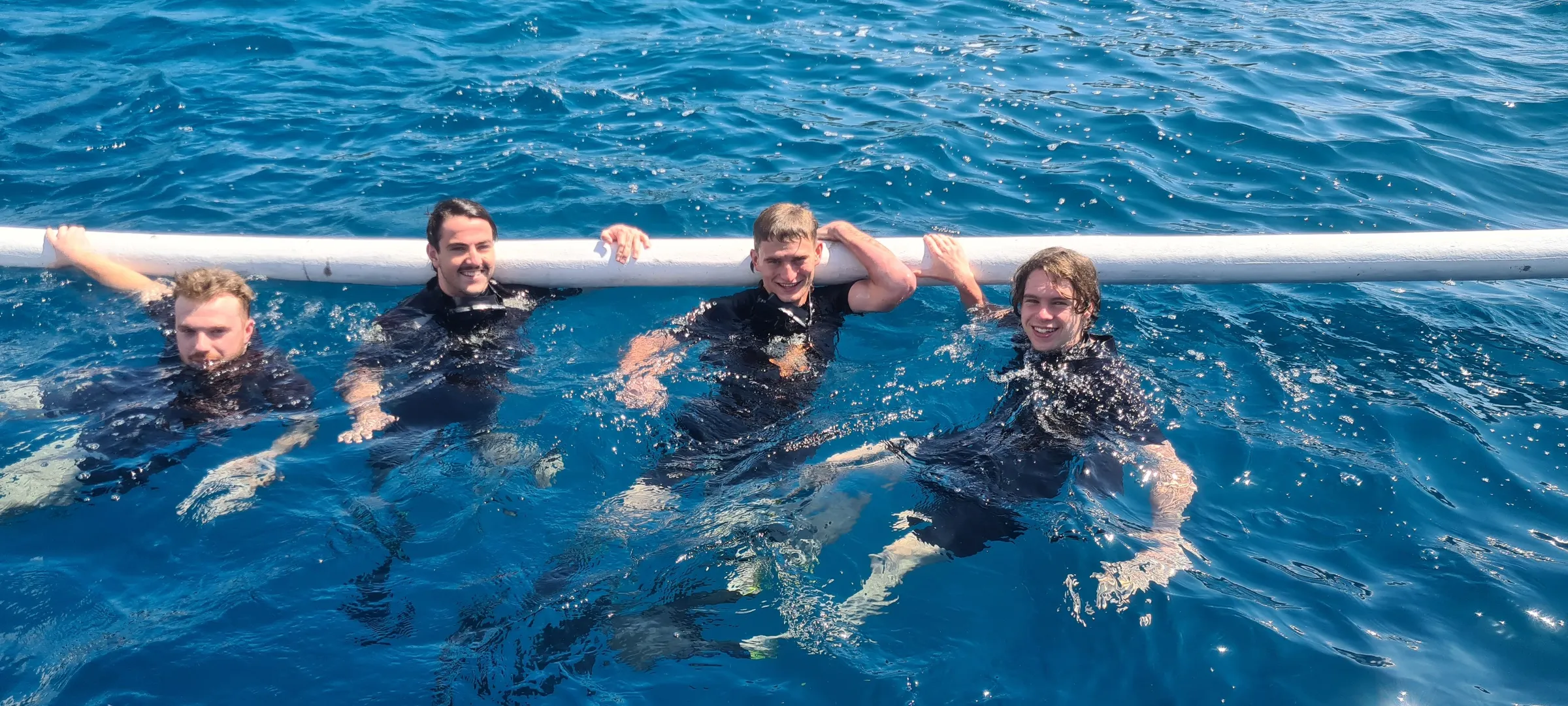
The simplest session on Gili Air needs no boat and no booking: walk in from the east coast — the stretch facing Lombok — and swim out over the reef flat. That is where the water is calmest, where the harbour boats do not pass, and where turtles come in to feed on the shallow seagrass.
Three things locals know that first-timers do not:
- Go at mid or high tide. At low tide the reef flat gets very shallow — you end up crawling over seagrass in 40 cm of water, which is bad for you and worse for the reef. Any beach bar can tell you the tide times, or check them the evening before.
- Wear something on your feet to the water line, then fins. Broken coral washes up on the beaches; the sand-only entries move around with the season, so watch where families are swimming.
- Look at the edge, not the middle. The magic zone is the drop-off — the line where the pale reef flat tips over into darker blue. Turtles, schooling fish and the occasional cuttlefish patrol that edge. Float above it and drift slowly; you will see more in 20 minutes than in an hour of random zig-zag.
Respect the current. The channels between the islands can run fast when the tide is moving. Stay inside the reef edge unless you are a strong swimmer, keep an eye on a fixed point on shore, and if you feel yourself being carried, swim across the current back toward the beach — never against it.
The classic three-island boat trip
Every kiosk on the island sells the same famous day out: a shared boat that loops Gili Air, Gili Meno and Gili Trawangan with snorkel stops along the way — usually a turtle spot off Meno’s wall, the shallow underwater statues off Gili Meno that you have already seen on Instagram, and a reef stop or two, with a lunch break on another island before the boat brings you home.
It is cheap, it is cheerful, and with 20 people on board it is exactly as intimate as that sounds. Our honest advice for getting the most out of it:
- Take the morning departure — lighter wind, better light, fewer boats stacked on the statue site.
- Bring your own mask if you have one; rental masks on shared boats have lived hard lives.
- The statues sit in only a couple of metres of water. Free-dive down by all means — just never stand on them or on the coral around them.
If you would rather have the same sites with six people instead of twenty, private charters exist all over the island — ask where you are staying, and go early.
Turtle etiquette — the two-metre rule
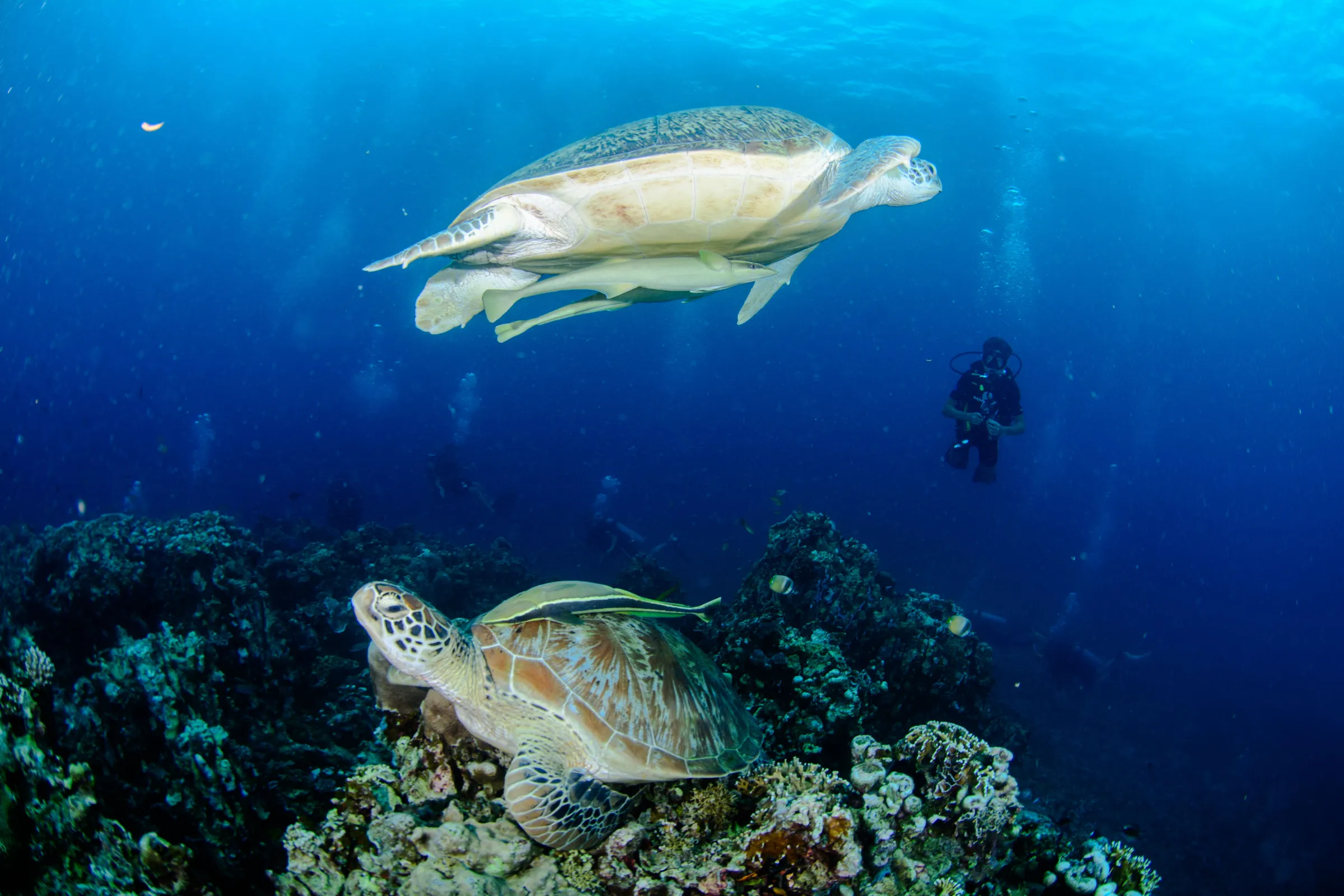
The Gilis are one of the easiest places on Earth to swim with wild turtles, and the turtles are relaxed precisely because most people behave. Keep it that way:
- Two metres of space, always. Approach slowly from the side, never from above or behind.
- Never touch, never chase, never block a turtle’s path to the surface — they need to breathe like you do.
- No standing on coral. If you need to fix your mask, do it in deep water or on sand.
- Reef-safe sunscreen, or better, a rash guard. The midday sun here burns through an hour of floating face-down astonishingly well.
A turtle that is not bothered will keep feeding calmly right in front of you — that is the encounter you came for, and it only happens when you are boring to them.
When to come
You can snorkel Gili Air twelve months a year. The April to November dry season is the calm-sea sweet spot — flat mornings, long visibility, easy beach entries. The wet season (roughly December to March) brings afternoon showers and more surface chop, but mornings are often still lovely and the water is just as warm. The full picture is in our month-by-month guide.
Any month: go early. The sea is flattest and the reef busiest with life before 10 a.m.
The moment the mask stops being enough
Here is the honest ending we promised. Almost every week, someone comes back from a snorkel trip, drops their fins on our deck and says the same sentence: “There was a turtle just sitting there, five metres down, and I couldn’t reach it.”
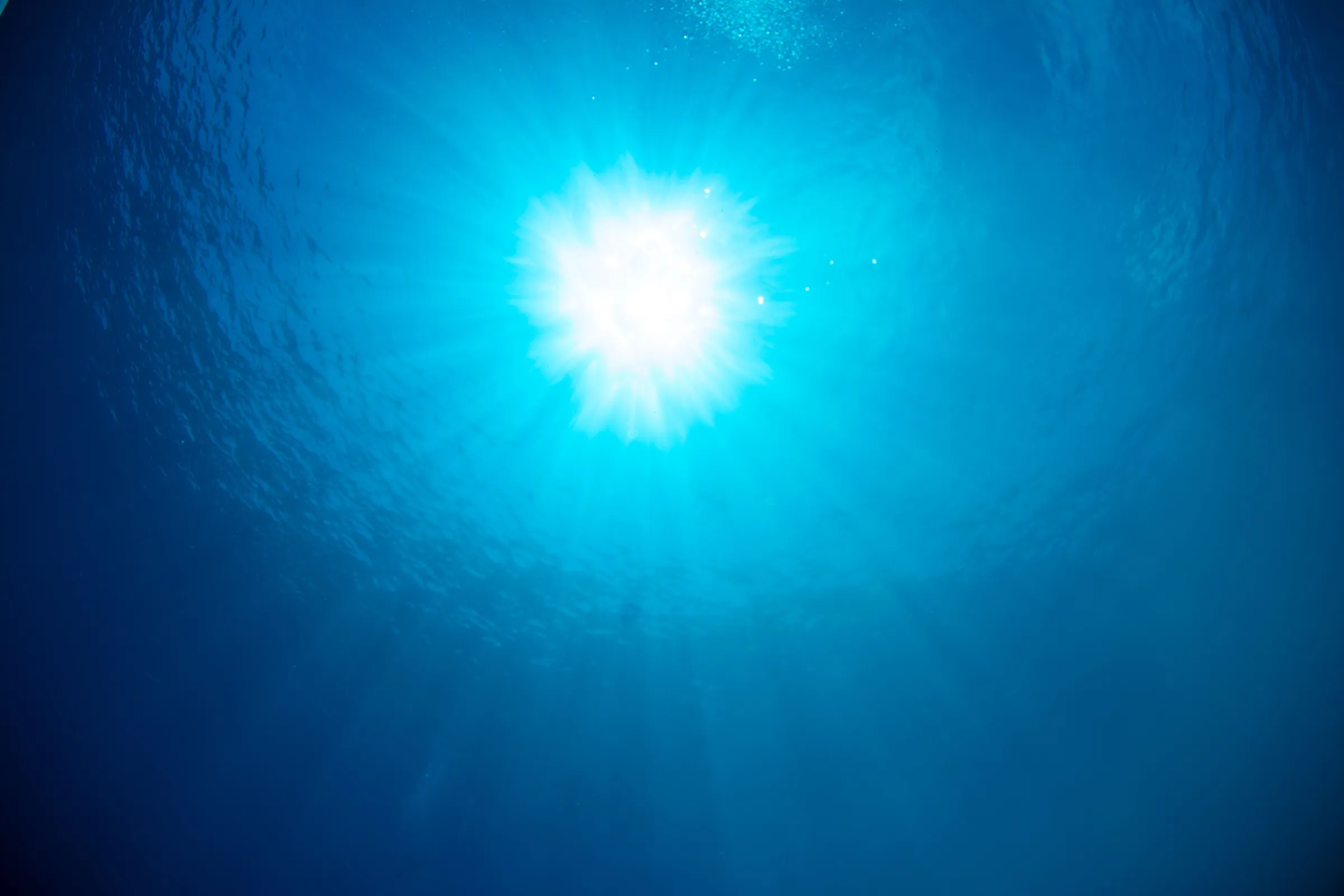
Snorkeling shows you the roof of the reef. At some point you will want to open the door:
- SSI Basic Diver — a real first dive with an instructor, most of it spent exactly where you have been snorkeling, just two storeys lower. No certificate needed, one relaxed morning or afternoon, maximum 4 people per instructor.
- Freediving trial — if what you actually want is to slip down to that turtle on one breath and come back, this is the discipline for it, and Gili Air is one of the best places in Asia to learn it.
- Not a confident swimmer? Read our straight answer on whether non-swimmers can try diving — it is more encouraging than you expect.
Either way, the reef does not care whether you arrive with a tank, a snorkel or one deep breath — it just rewards the people who show up early and move slowly.
Questions about conditions this week, tides, or whether your kids are old enough for the boat trip? Message us on WhatsApp — we look at this water every morning.