You have read about freediving, maybe watched a video of someone gliding down a line in total silence, and you want to know what it feels like. The Freediving Trial exists for exactly that: half a day, no previous experience, and a real descent in the ocean at the end. Here is what happens, step by step.
In short
- Half a day: breathing workshop, pool session, then one ocean session.
- Depth: 10 m maximum, usually 5 to 8 m. The feeling matters, not the number.
- IDR 1,900,000, equipment included, from age 12, credited toward Level 1 within 30 days.
Before the day
When you book, we send you a short medical questionnaire. If you answer yes to anything on it, bring a doctor’s clearance. Then just sleep well, eat a light breakfast, and avoid arriving with a cold: blocked sinuses and freediving do not mix.
Bring: swimwear, a towel, sunscreen (reef-friendly if possible) and water. Mask, fins, wetsuit and weights are included. If you have a comfortable mask and snorkel of your own, bring them.
Step 1: breathing on dry land
We start sitting down, not in the water. Your instructor explains what happens in your body when you hold your breath: why the urge to breathe comes from carbon dioxide rather than a lack of oxygen, what the mammalian dive reflex is, and why you must never hyperventilate before a dive.
Then you practise: slow diaphragmatic breathing, relaxation, a calm breath-hold timed by your instructor. This is usually the first surprise of the day. People who think they can hold their breath for 30 seconds often discover they can do much more once they relax.

Step 2: the pool
In calm, shallow water you learn the basics that make the ocean easy:
- Static: floating face down, relaxed, holding your breath while your buddy watches.
- Finning: how to use long fins slowly and efficiently.
- Equalisation: how to clear your ears gently, early and often, before you feel pressure.
- Safety: the buddy system and what to do if something goes wrong. In freediving, you never dive alone.

Step 3: the ocean
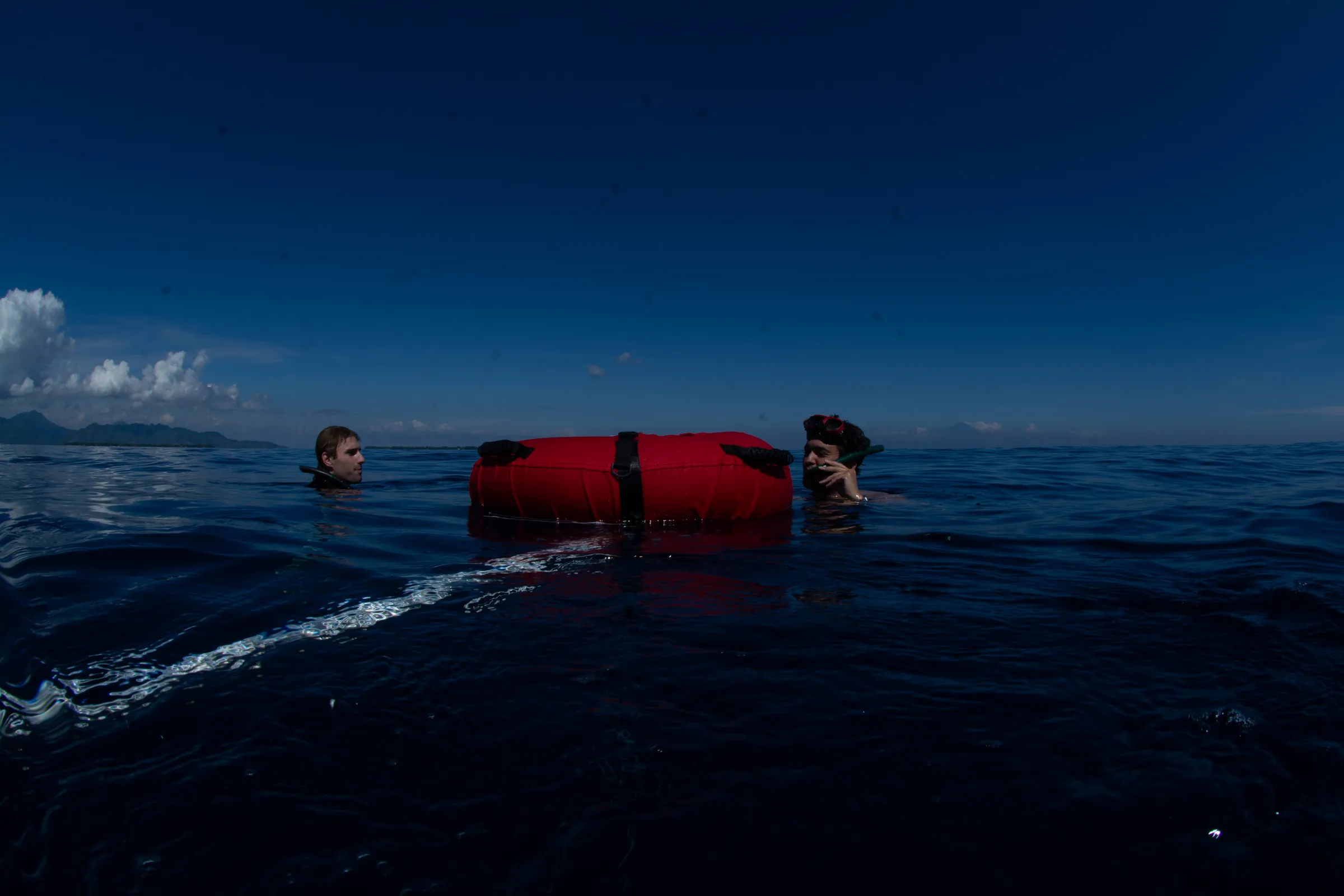
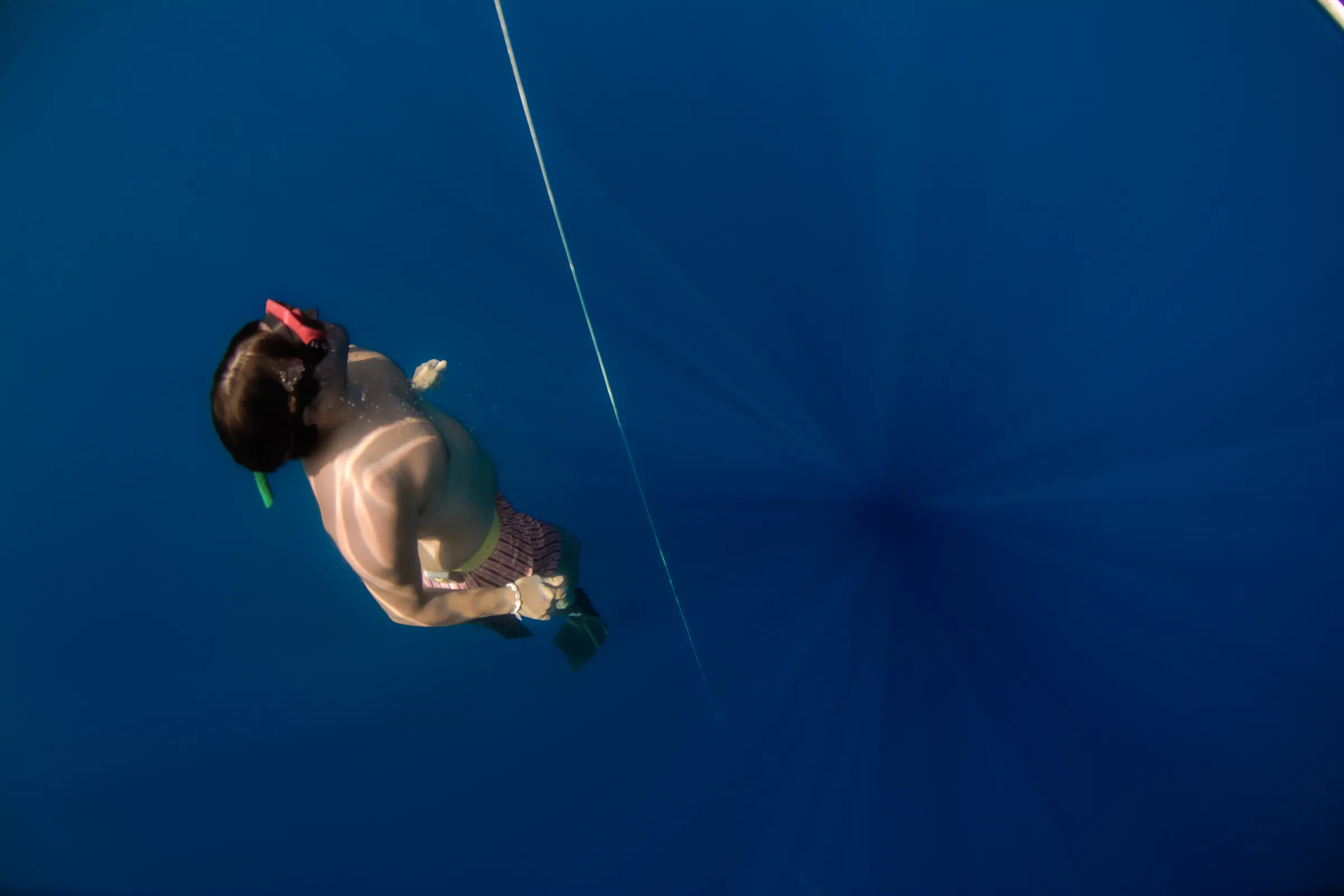
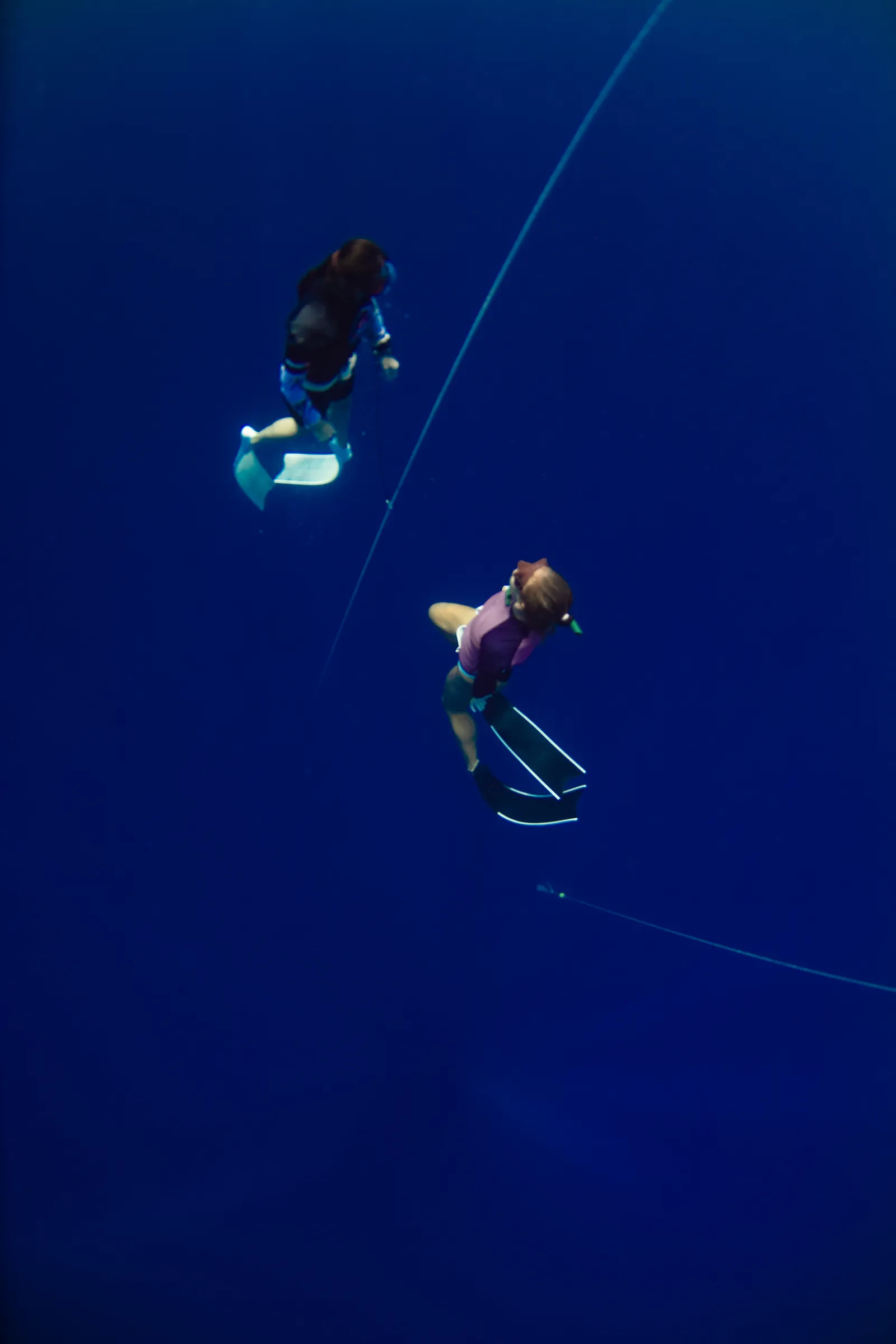
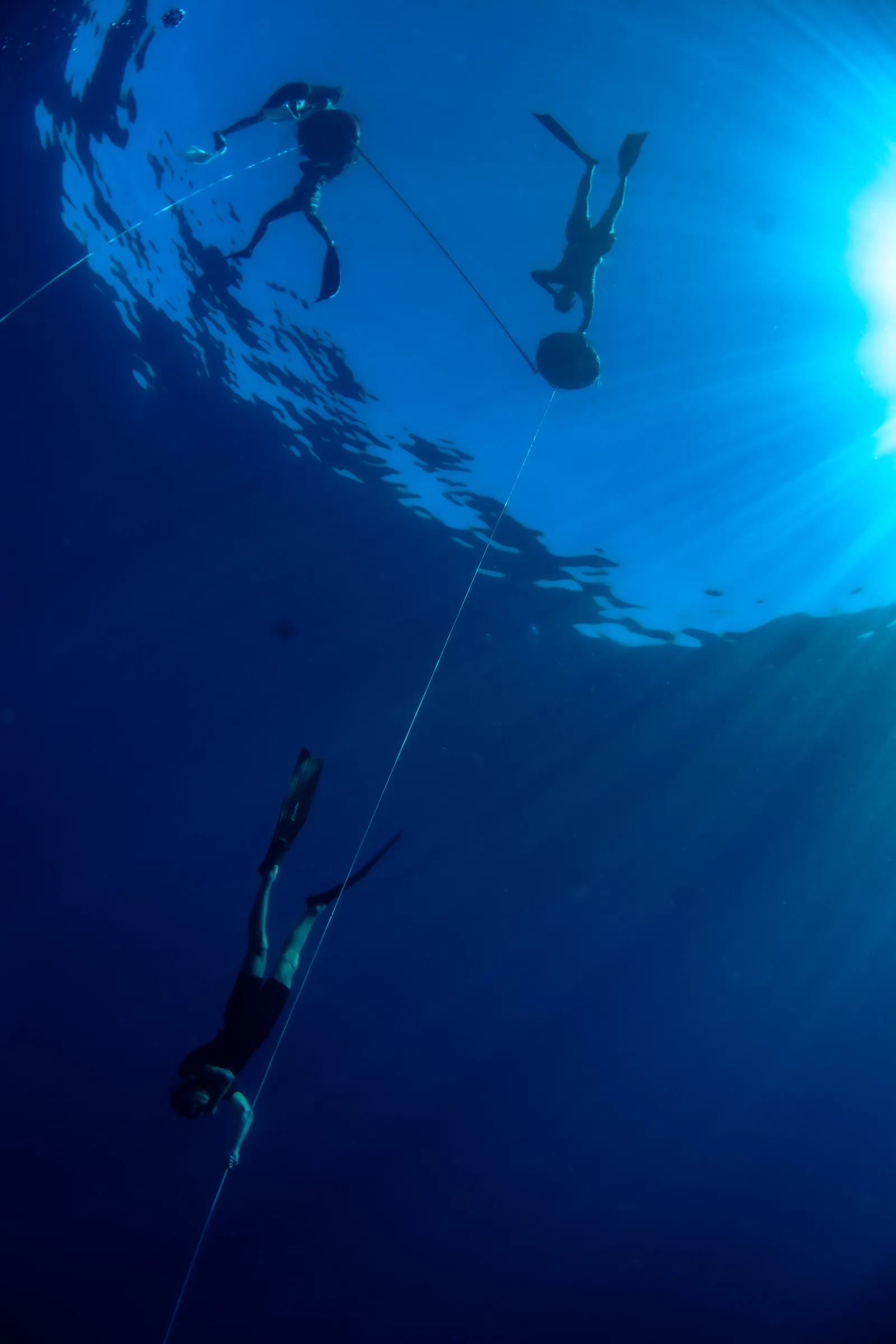
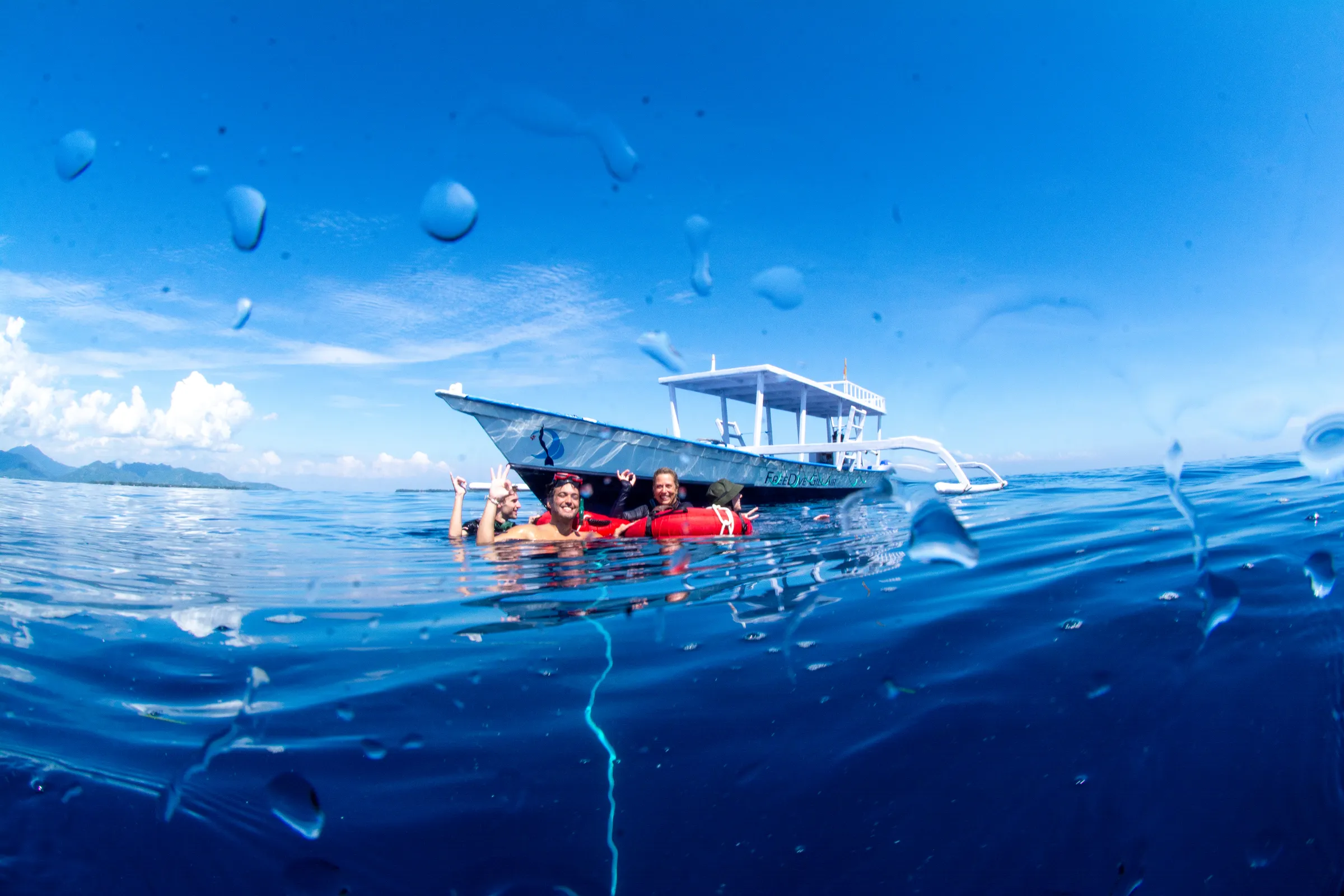
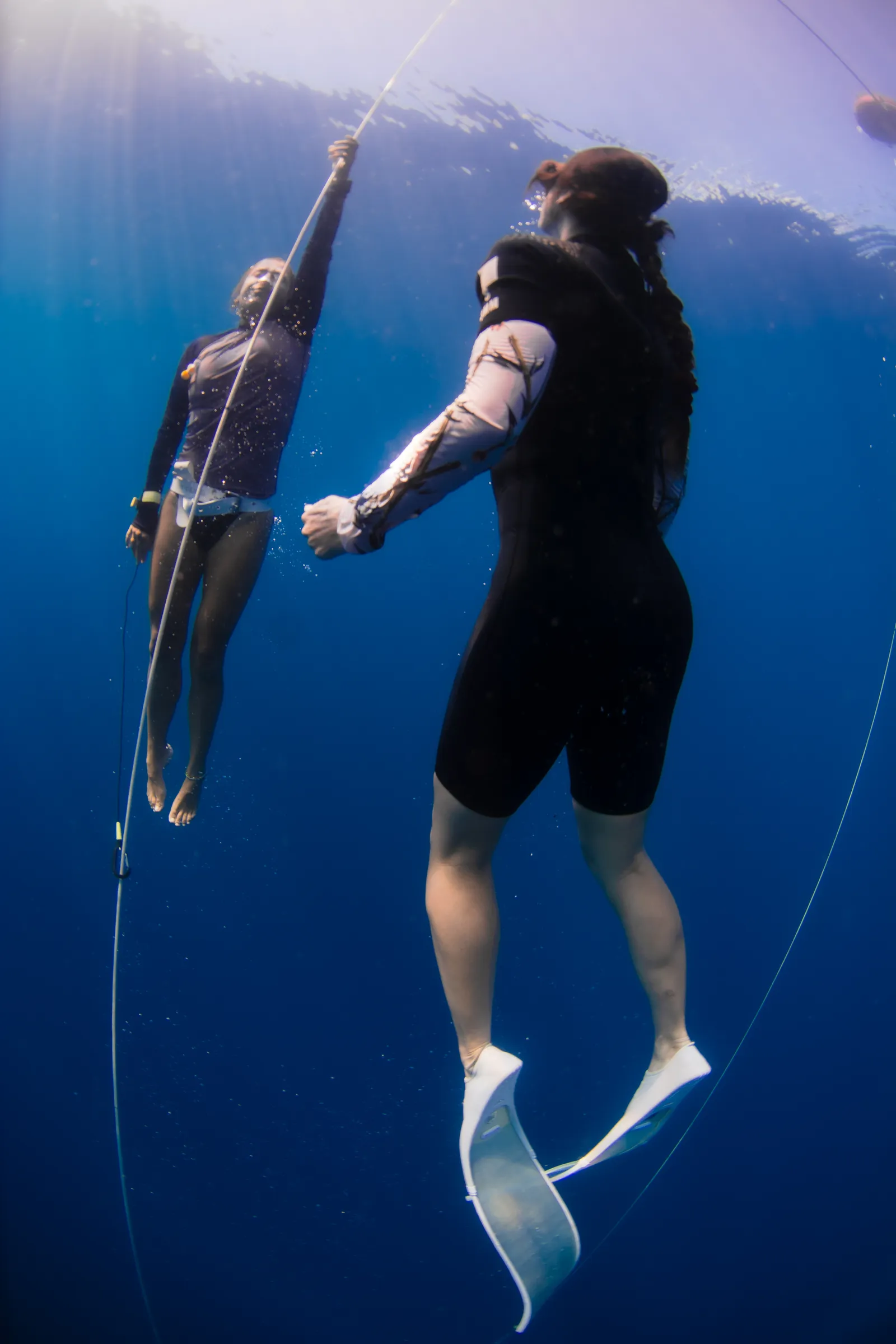
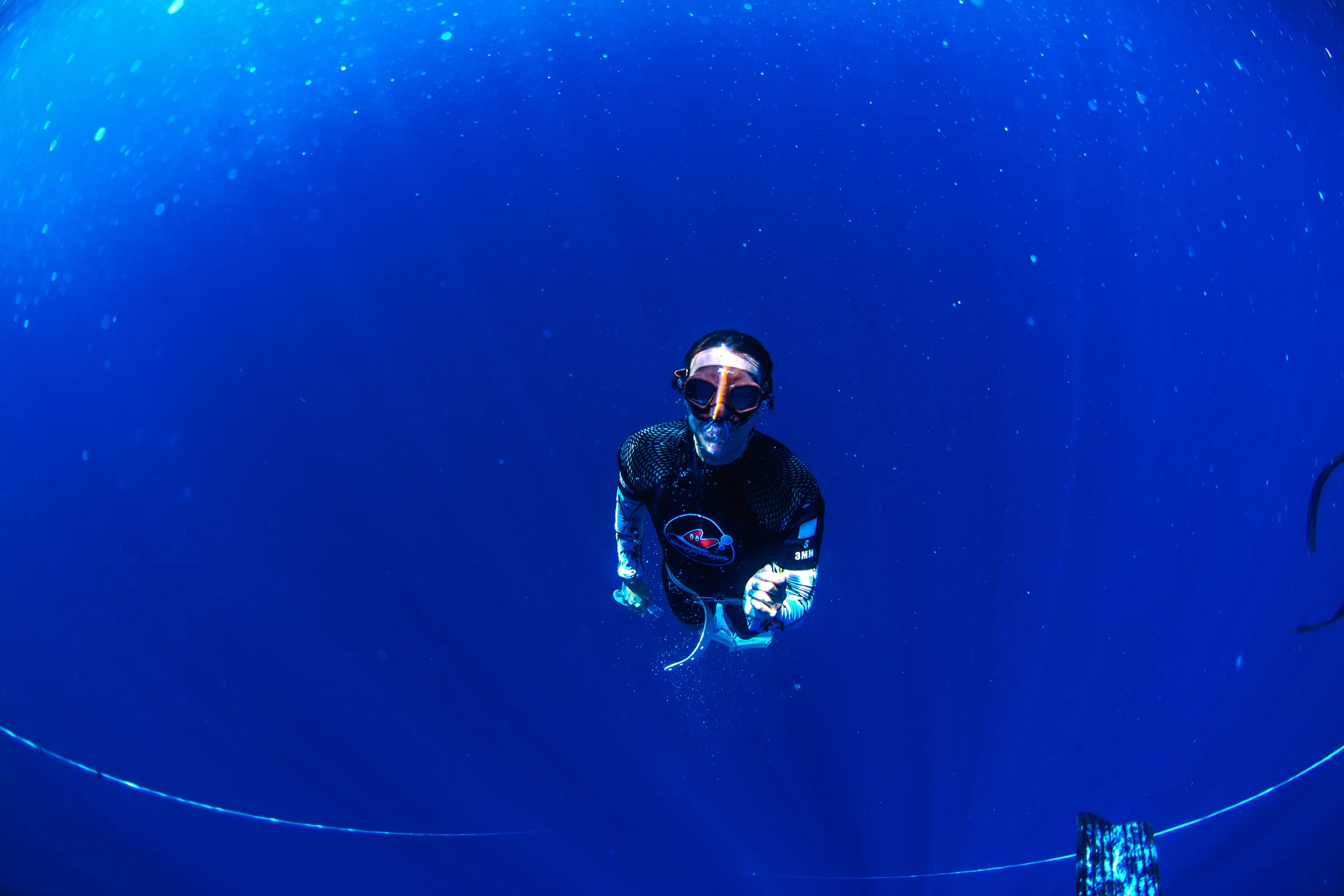
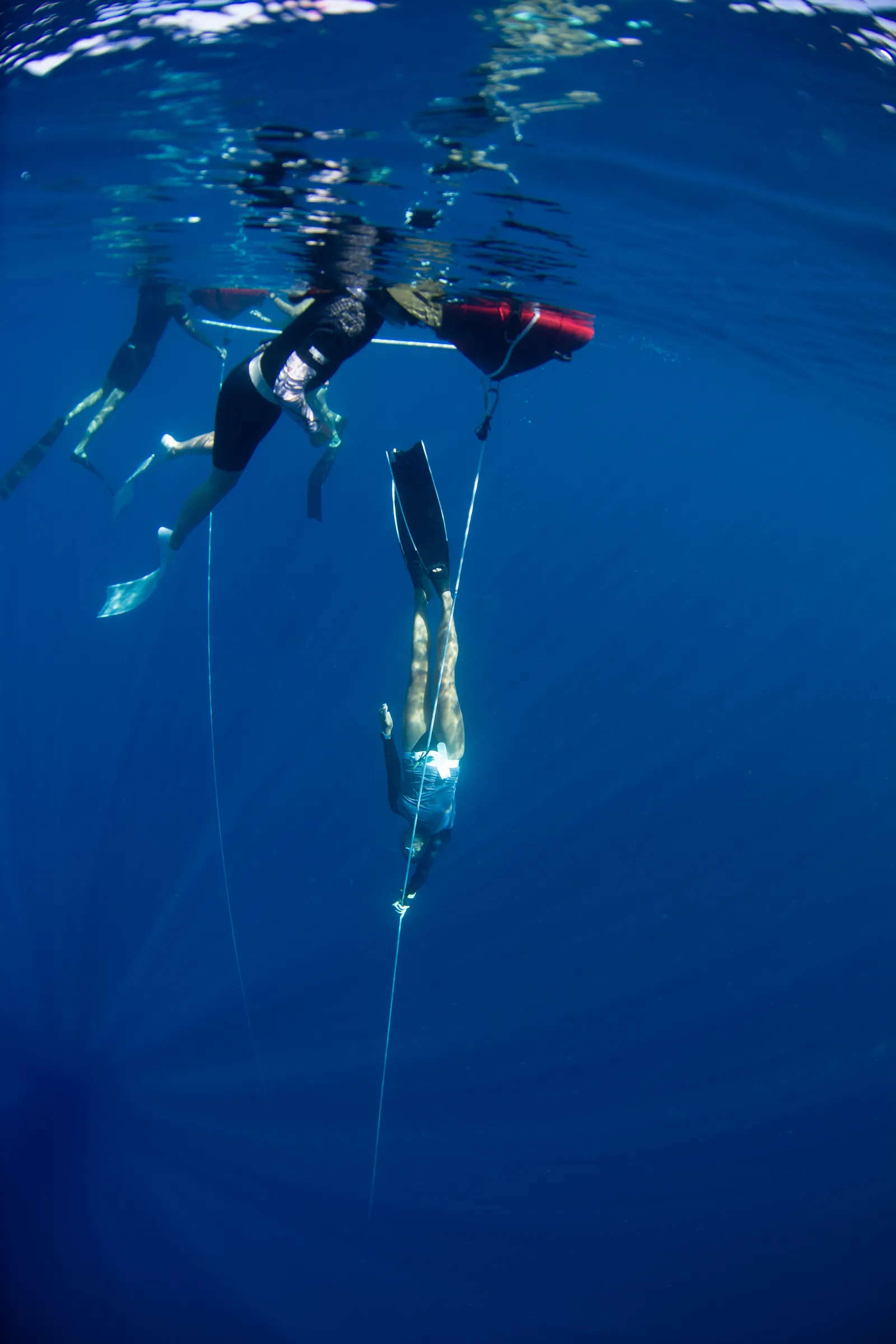
Then it is time for the real thing. A short boat ride takes you to a calm, shallow site where a buoy and a line are waiting. You breathe at the surface, holding the buoy, then take one breath, turn head down and follow the line, equalising as you go. Your instructor is at your side, and your buddy watches from the surface.
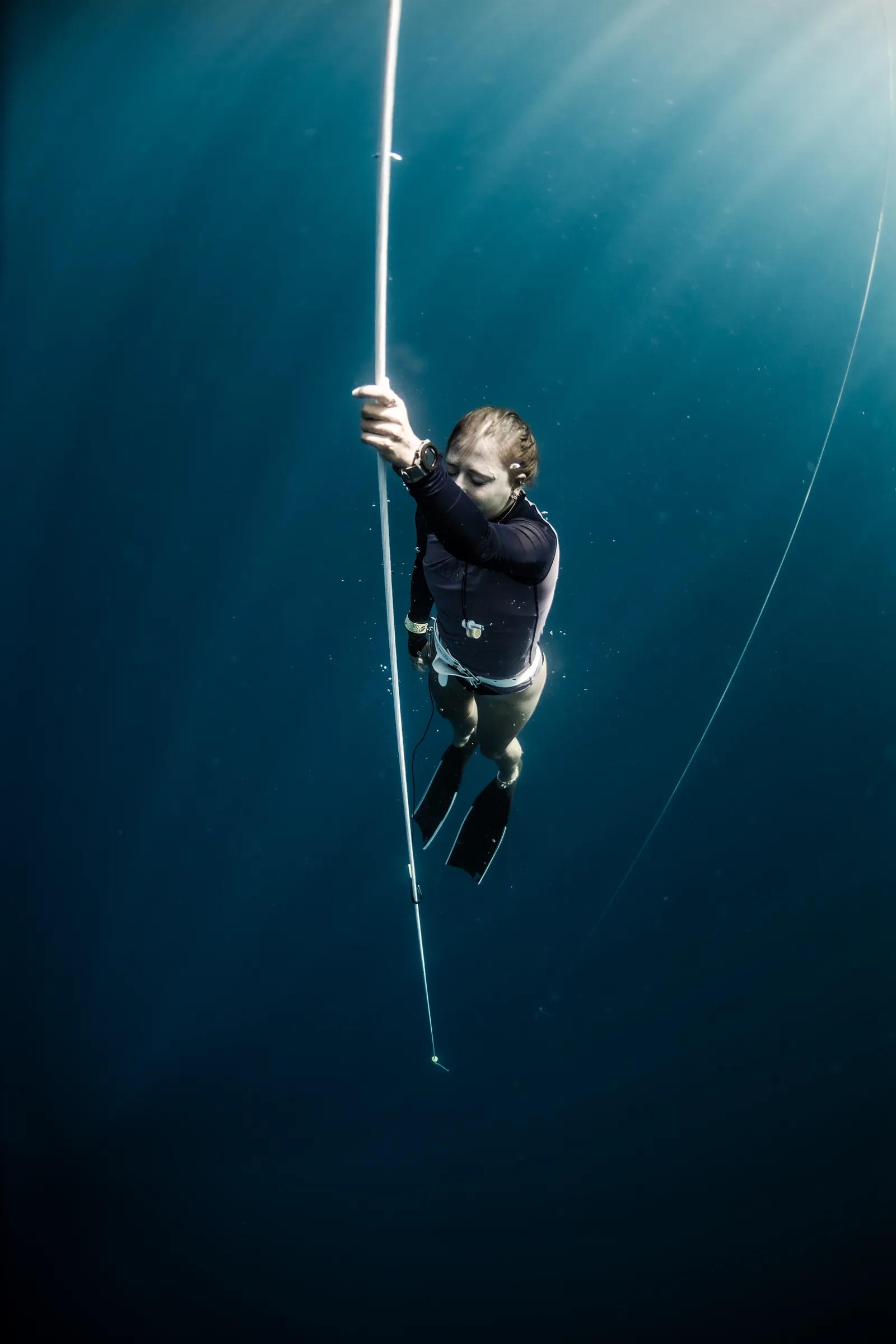
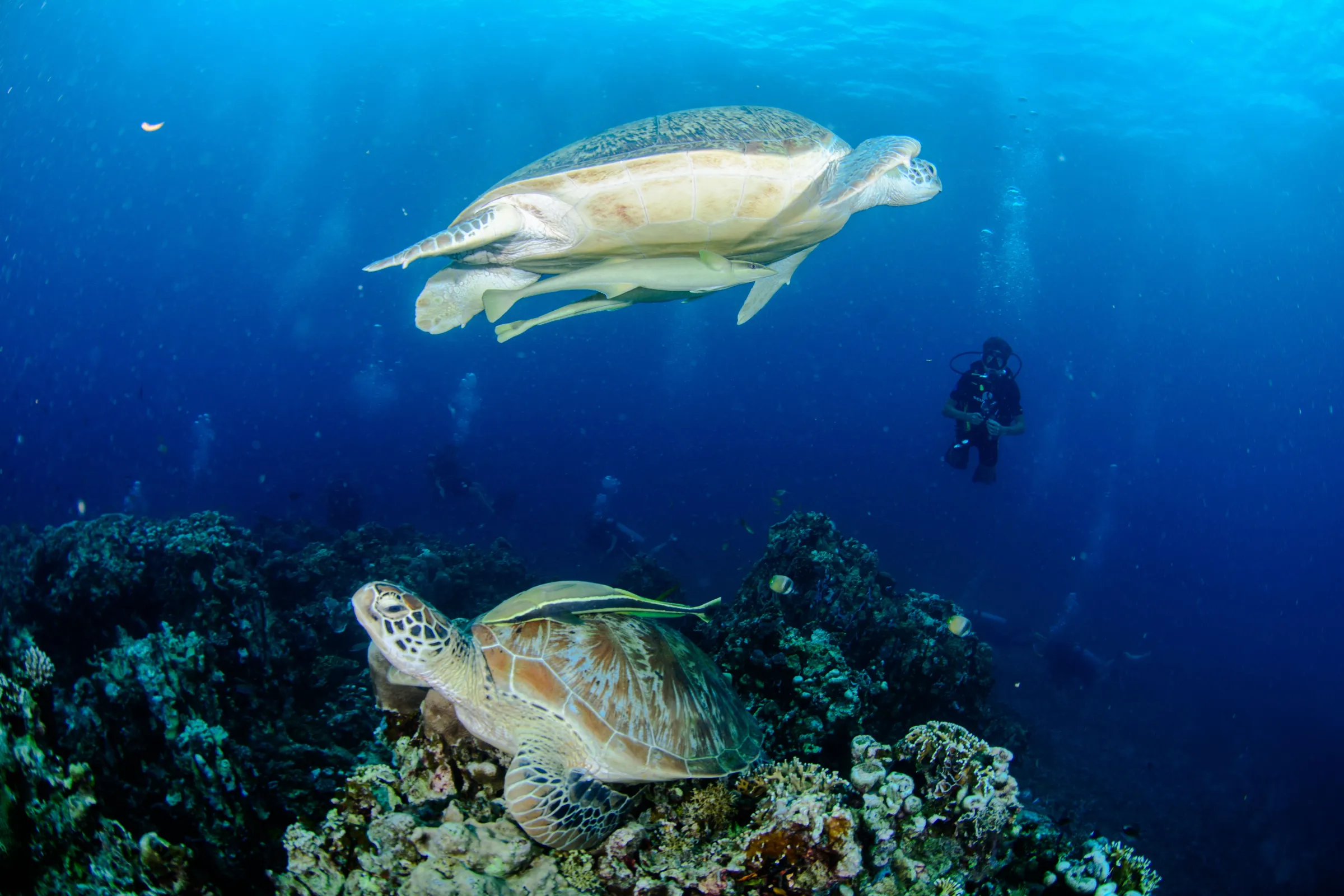
Most people reach somewhere between 5 and 8 metres on the trial, with a maximum of 10. What everyone remembers is not the depth but the silence, the light coming down through the water, and the turtle or reef fish that do not swim away because you make no noise.
After the trial
We finish with a debrief: what went well, what to work on, and how you felt. If you are hooked (most people are), the next step is SSI Freediving Level 1: two days, certified to 20 metres. Continue with us within 30 days and the cost of your trial is credited toward the course.
Common questions
I’m not athletic, can I do it? Yes. Freediving is about relaxation more than fitness. Our article is freediving for me? answers the usual worries.
How is it different from snorkelling? Snorkelling stays at the surface. On the trial you learn the breath-hold, the equalisation and the body position to go below the surface in control, and come back safely with a buddy.
Can I combine it with scuba on the same trip? Yes; just do your freediving before scuba, not after, on any given day. Our freediving vs scuba comparison explains why.
Ready to try? Book the Freediving Trial or message us on WhatsApp or at freedivegiliair@gmail.com with your dates.
Keep reading
Freediving on Gili Air: the complete guide
When is the best time to freedive on Gili Air?
Freediving safety: why you never dive alone
A freediving training week on Gili Air
Freediving or scuba diving: which one is for you?
Freediving with turtles on Gili Air

Your first time diving: what a try dive on Gili Air is really like
Snorkeling Gili Air — turtles, the three-island boat trip, and when to try a dive
Beyond Frenzel: hands-free, mouthfill and reverse packing