Freediving has a reputation for being extreme. In reality, practised properly, it is one of the calmest things you can do in the ocean. But it has one rule that never bends: you do not freedive alone. Everything else in freediving safety follows from that rule. Here is why.
In short
- Never alone: one diver down, one trained buddy watching, every single dive.
- No hyperventilation: it hides the urge to breathe and raises the risk of blackout.
- Stay within your training, rest between dives, and learn rescue on a proper course.
The real risk: blackout
The main danger in freediving is not running out of air at depth. It is a blackout: a loss of consciousness caused by low oxygen, which typically happens at the end of a dive, during the last metres of the ascent or just after surfacing. It comes without warning. A diver alone can drown; a diver with a trained buddy is brought to the surface, airway out of the water, and usually recovers within seconds.
That is why freediving safety is not about being strong. It is about always having someone whose only job is to watch you.
How the buddy system works
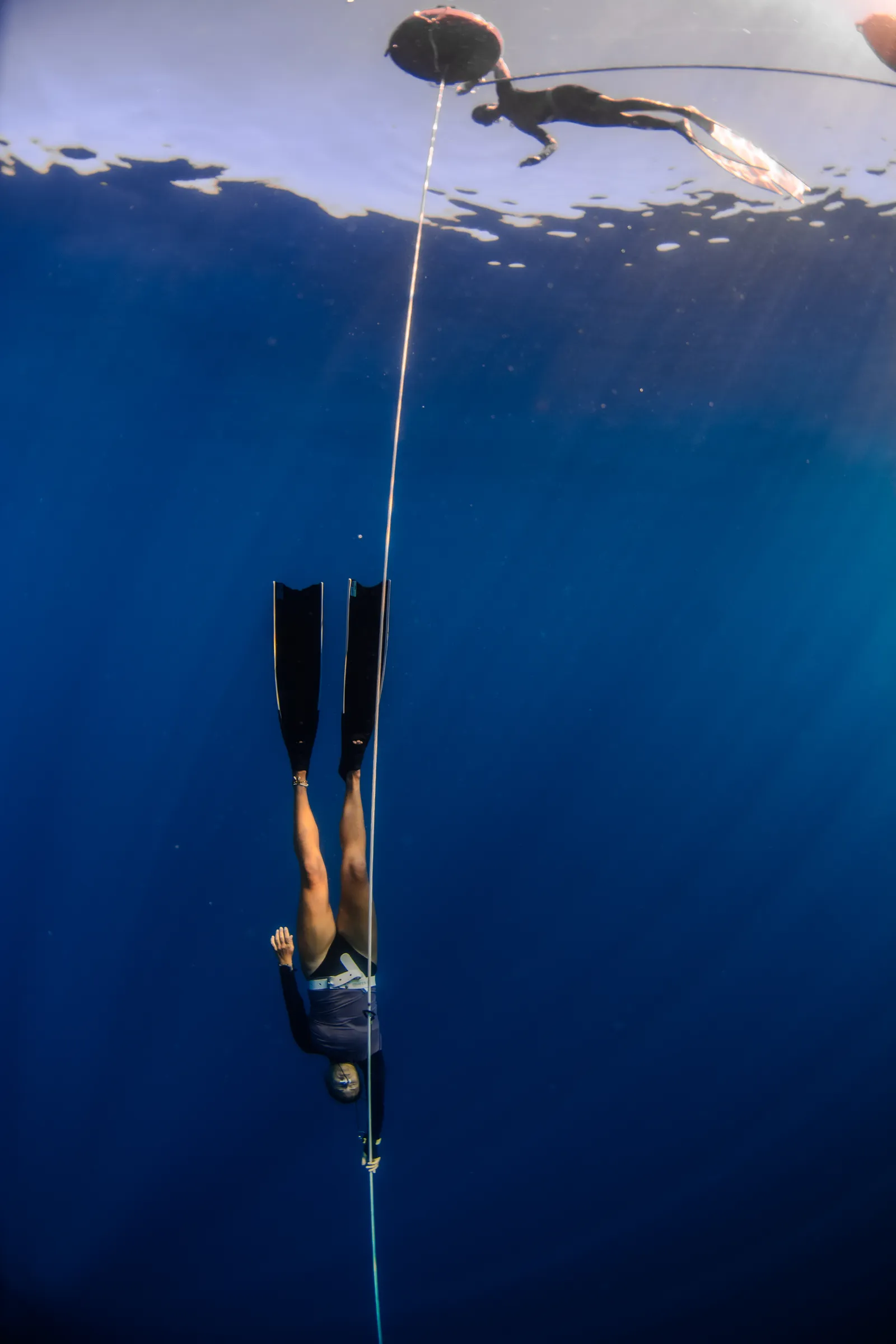
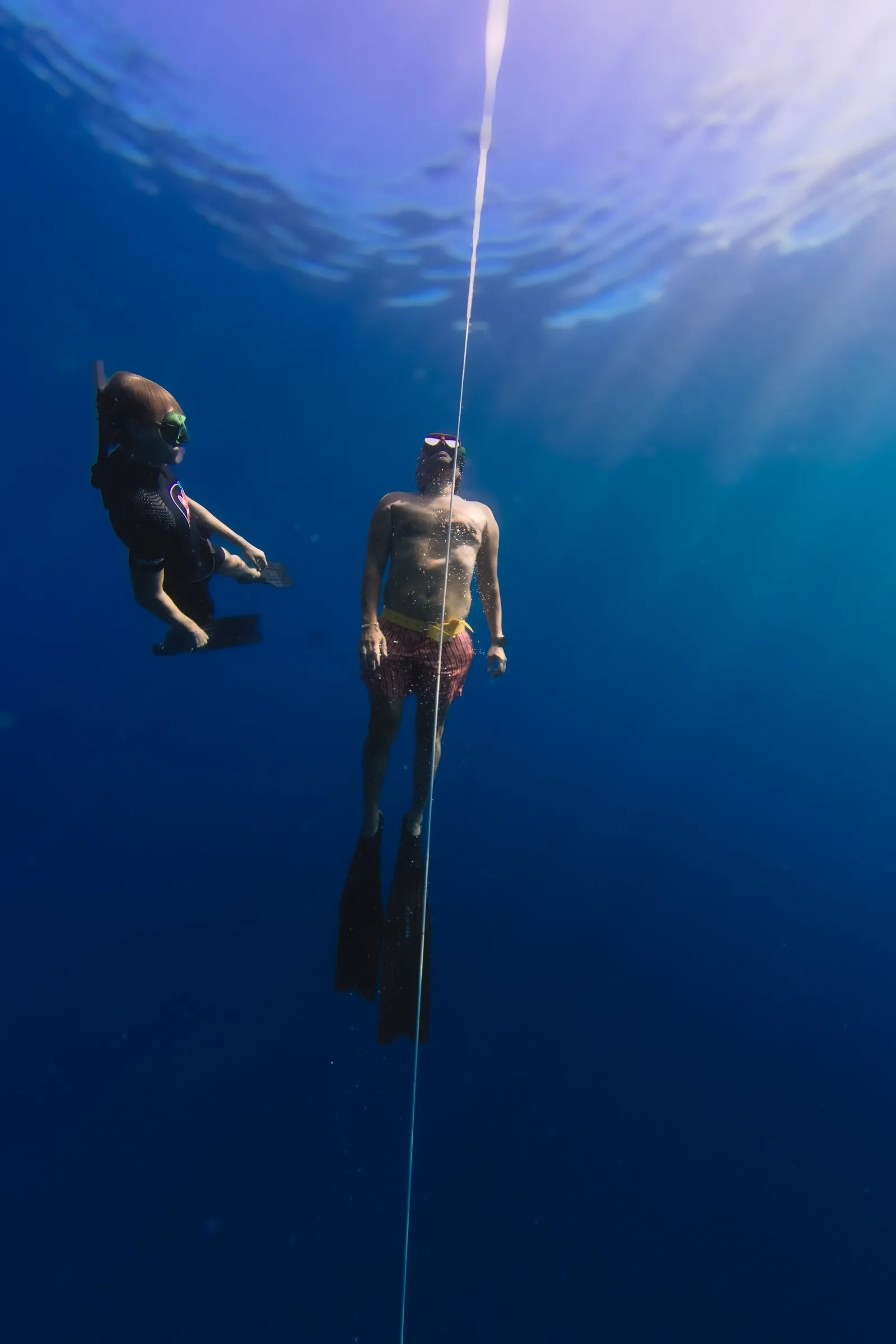
On the line, the rule is one up, one down:
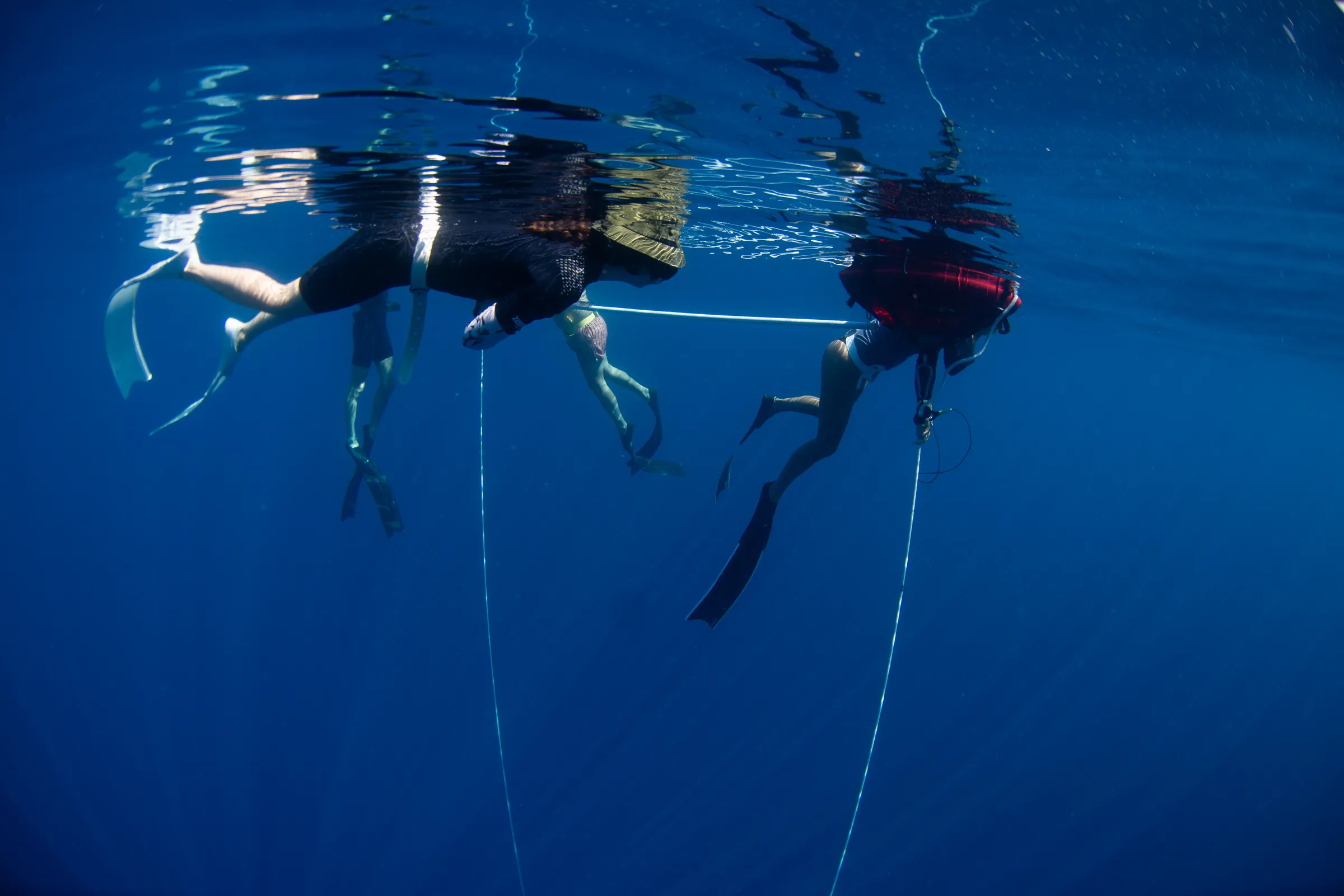
- One diver descends. The other stays at the surface, breathing calmly, watching.
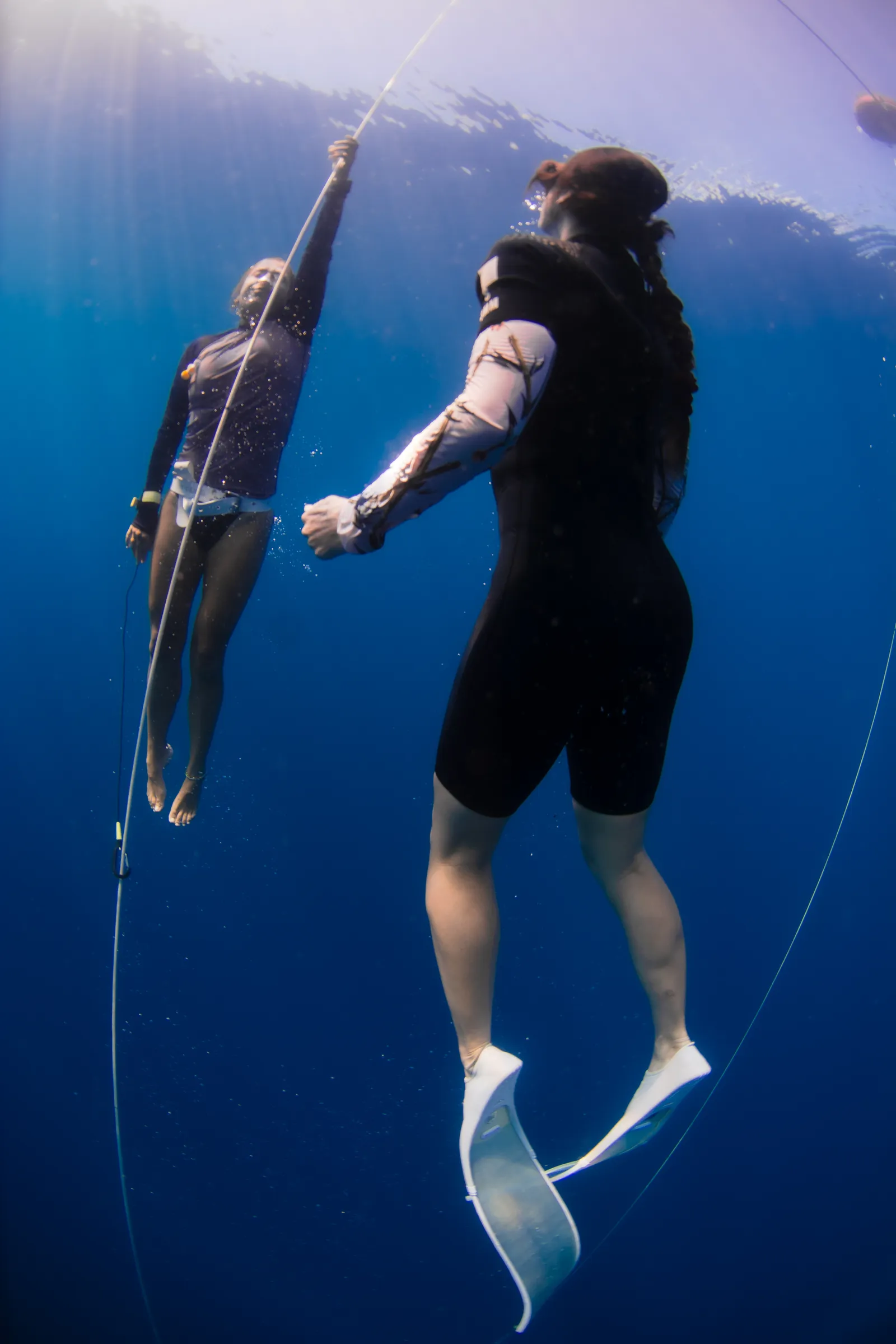
- The buddy follows the dive: counts the time, watches the turn, and as the diver comes back up, meets them in the last metres of the ascent.
- At the surface, the buddy stays close for the next 30 seconds or so, watching the recovery, ready to support the airway.
- Then the roles switch.
On deeper training dives, the diver is also attached to the line with a lanyard, so they cannot drift away from it.
Hyperventilation: the dangerous trick
Breathing fast and deep before a dive feels like it should help. It does not. It lowers the carbon dioxide in your blood, which delays the urge to breathe, without adding useful oxygen. You lose your natural alarm clock, and the risk of blackout goes up. What you learn instead is the opposite: slow, relaxed breathing, a calm final breath, and listening to your body.
The surface protocol
When a freediver surfaces, they follow a short routine taught on every course:
- Recovery breathing: a few quick, active breaths to bring oxygen back fast.
- Clear the face: mask off or snorkel out, face visible.
- Signal OK to the buddy and say that you are OK.
It looks like a ritual. In fact it lets the buddy check, in a few seconds, that the diver is fully conscious.
The everyday habits
- Stay within your certification: 20 metres on Level 1, 30 on Level 2. Progress comes from technique, not from pushing numbers.
- Rest between dives: at least twice as long at the surface as your dive time, more as you go deeper.
- Don’t dive tired, ill or after alcohol. Freediving rewards a rested body.
- Never force your ears. Read our article on equalisation and the Frenzel technique.
- Freedive before scuba, never after on the same day.
- Never freedive in a pool or the sea alone, not even “just a static”.

How we teach safety on Gili Air
Safety is not a separate module: it runs through every session. On the Freediving Trial you learn the buddy system in the pool before going to the ocean. SSI Freediving Level 1 teaches buddy practices and rescue from depth, so you leave able to keep a partner safe. And once certified, line training gives you a trained safety buddy at the surface for every dive.
Freediving, done right, is a sport of trust: in your buddy, in the line, and in your own calm. Questions about safety? Ask us on WhatsApp or at freedivegiliair@gmail.com.
Keep reading
Is freediving for me? An honest answer

Ears and freediving: why Frenzel changes everything
Beyond Frenzel: hands-free, mouthfill and reverse packing
Your first freediving trial on Gili Air, step by step
Freediving or scuba diving: which one is for you?

Before you dive again: be honest with yourself, be fair to your group

When is the best time to freedive on Gili Air?

Freediving on Gili Air: the complete guide

Freediving with turtles on Gili Air