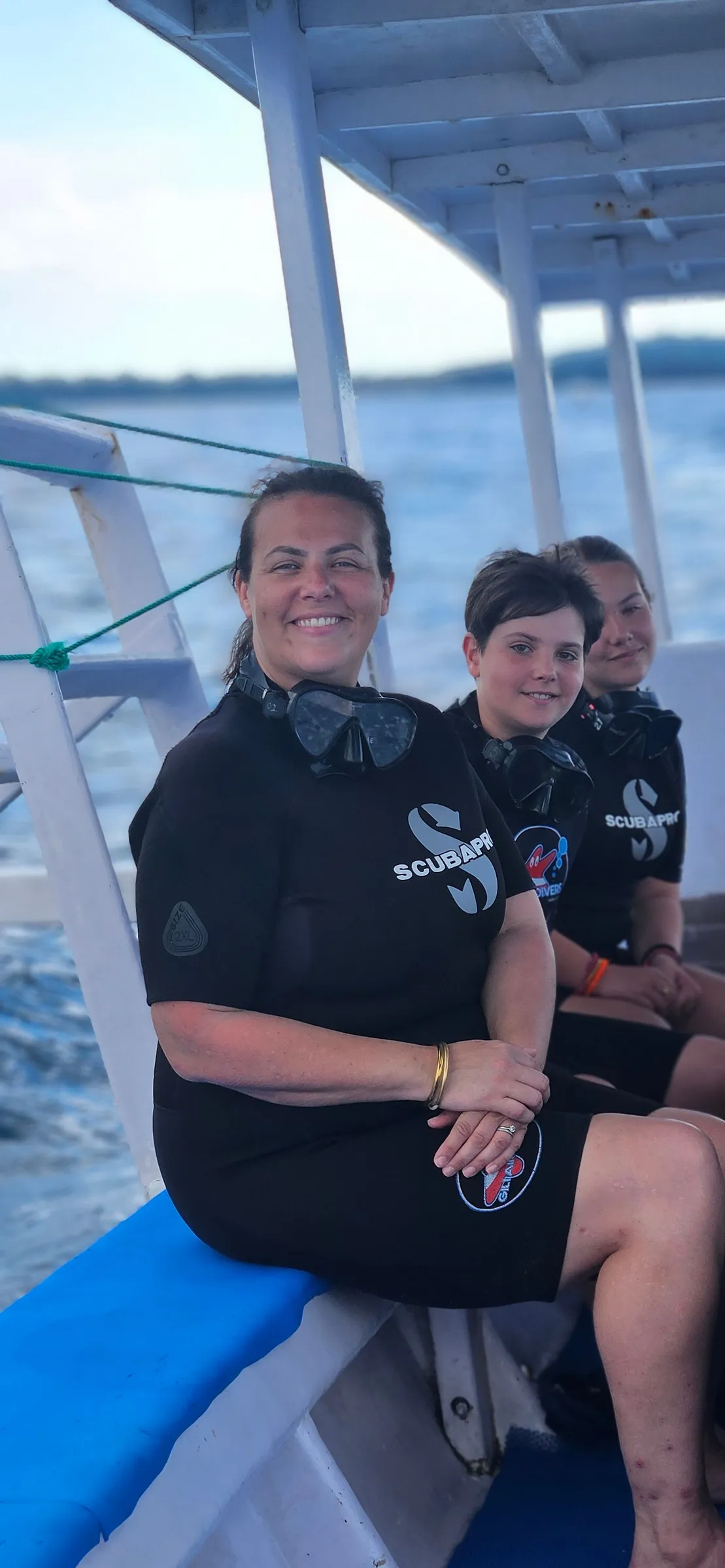
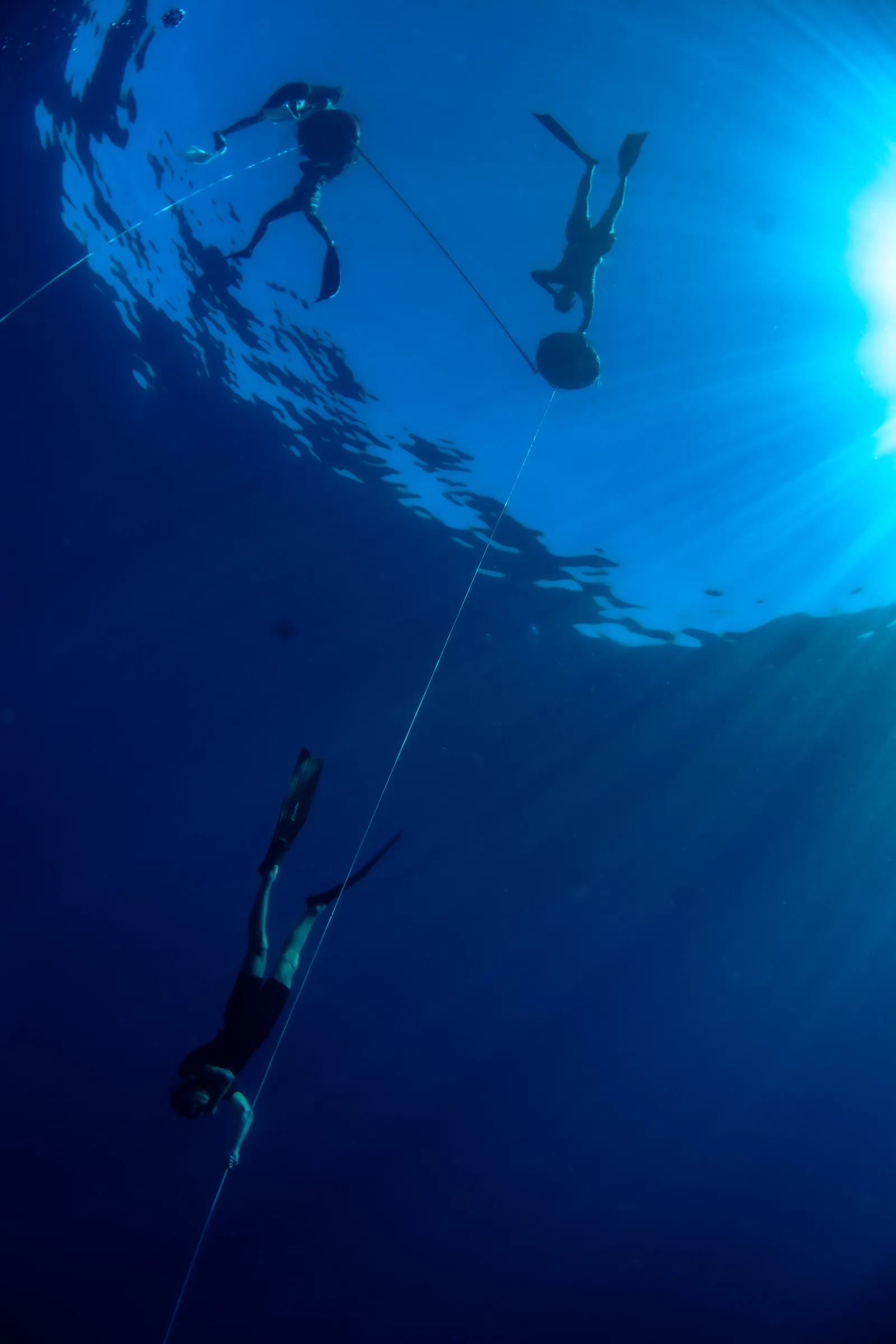
Gili Air is small enough to cross on foot in an hour, and the deep blue starts a few minutes off its beach. That combination is exactly what freediving needs: calm water, real depth close by, and a quiet island where you sleep well between sessions. Here is everything you need to know before you take your first breath-hold with the Freedive Gili Air team.
In short
- Never tried? The Freediving Trial: half a day, no experience needed, from age 12, down to 10 m maximum.
- Want a certification? SSI Freediving Level 1: two days, certified to 20 m.
- Already certified? Coaching, line training and multi-day packs, with water at about 28°C all year.
Why Gili Air works so well for freediving
The water is warm. Around 28°C in every month of the year. Warm water means a relaxed body, and a relaxed body is the whole game in freediving: less shivering, a lower heart rate, longer and calmer breath-holds.
Depth is close. Our training lines go in at calm sites within about five minutes by boat. No long transfers, no seasick hour before your first dive. You spend your energy in the water, not getting there.
The visibility is usually generous. On a typical day you can see 20 metres or more, so on the line you see where you are going and where you came from. For a first descent, that changes everything.
There is a pool for the first breaths. Static breath-holds, finning technique and rescue skills are learned in calm, shallow water before the ocean. You arrive at the line already knowing what to do.
It is a quiet island. No motorbikes, no cars, early nights. Freediving rewards sleep and calm, and Gili Air gives you both.
Freediving or scuba?
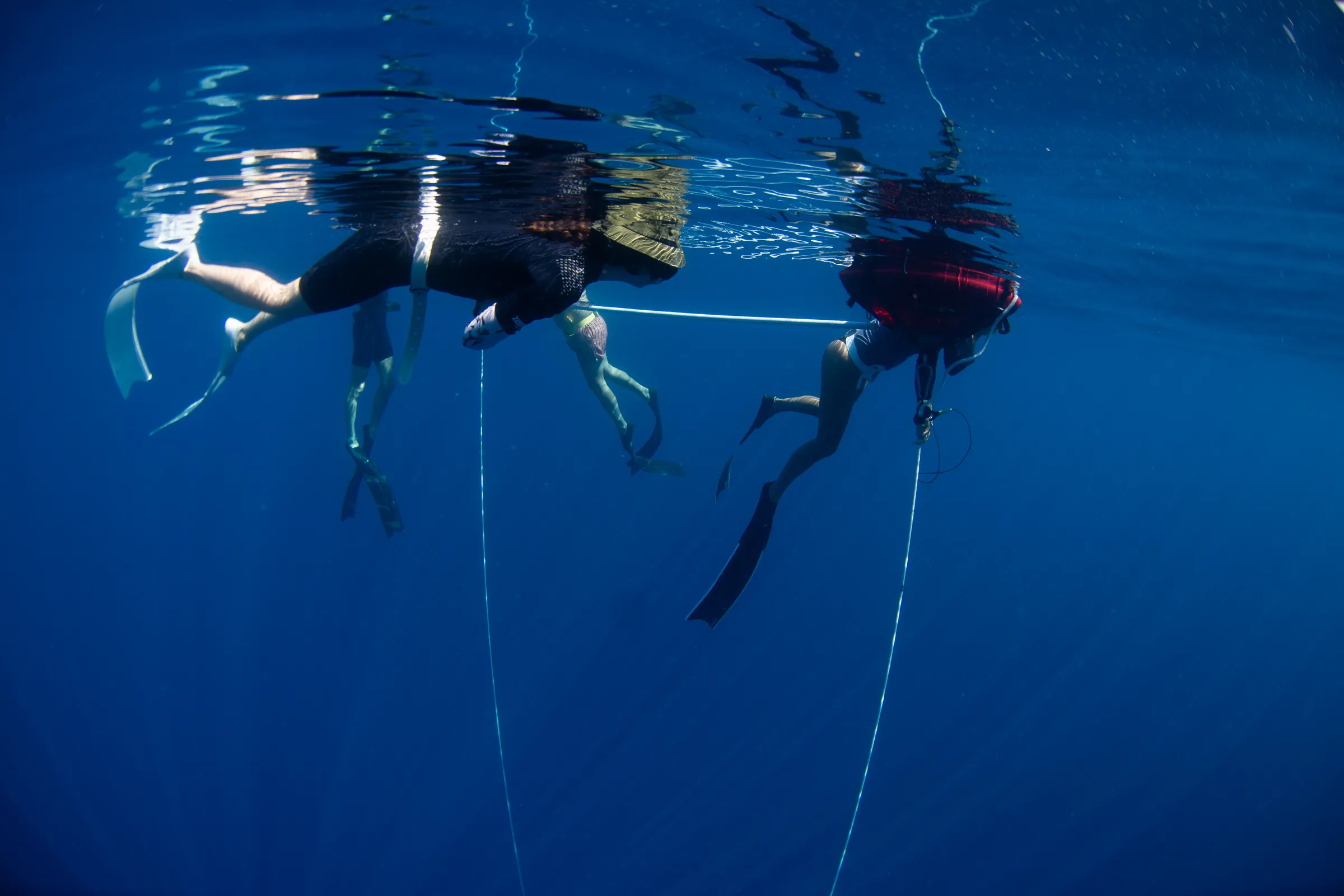
Freediving is diving on one breath: no tank, no regulator, just you, a mask, long fins and a line. Scuba is diving with a tank, staying down for forty to sixty minutes. They are two different sports, and on Gili Air you can do both, with the same centre. If you are hesitating, our snorkel, scuba and freediving comparison will help you choose.
The path, step by step
1. Freediving Trial (half a day, IDR 1,900,000). A breathing and relaxation workshop, a pool session to learn the basics and safety, then one ocean session at a calm, shallow site. Maximum depth 10 metres, usually 5 to 8. From age 12. If you continue to Level 1 within 30 days, the cost of the trial is credited toward the course.
2. SSI Freediving Level 1 (2 days, IDR 4,900,000). Your first international certification, recognised alongside AIDA 2 and PADI Freediver. Breathing, Frenzel equalisation, buddy safety and rescue, efficient finning. Most students arrive holding their breath for about 30 seconds and leave holding it calmly for 2 to 3 minutes, and reach 15 to 20 metres on the last day. From age 14, with a 200-metre swim. The SSI theory is free online: do it before you fly and save half a day.
3. SSI Freediving Level 2 (3 days, IDR 6,900,000). From 20 to 30 metres. Advanced Frenzel, freefall, deeper relaxation. From age 16, after Level 1 or an equivalent card.
4. Train. Once certified, the most important thing is to keep diving. A coaching session (IDR 900,000) is instructor time on one specific problem: ears, descent, relaxation on the line. Line training (IDR 450,000) is supervised practice: you lead your dives, a safety buddy watches every one. Packs of 3 or 5 sessions bring the price per session down by up to 15%.
Freediving prices on Gili Air are always the list price: there is no online discount on freediving, so what you see on the freediving page is what you pay.
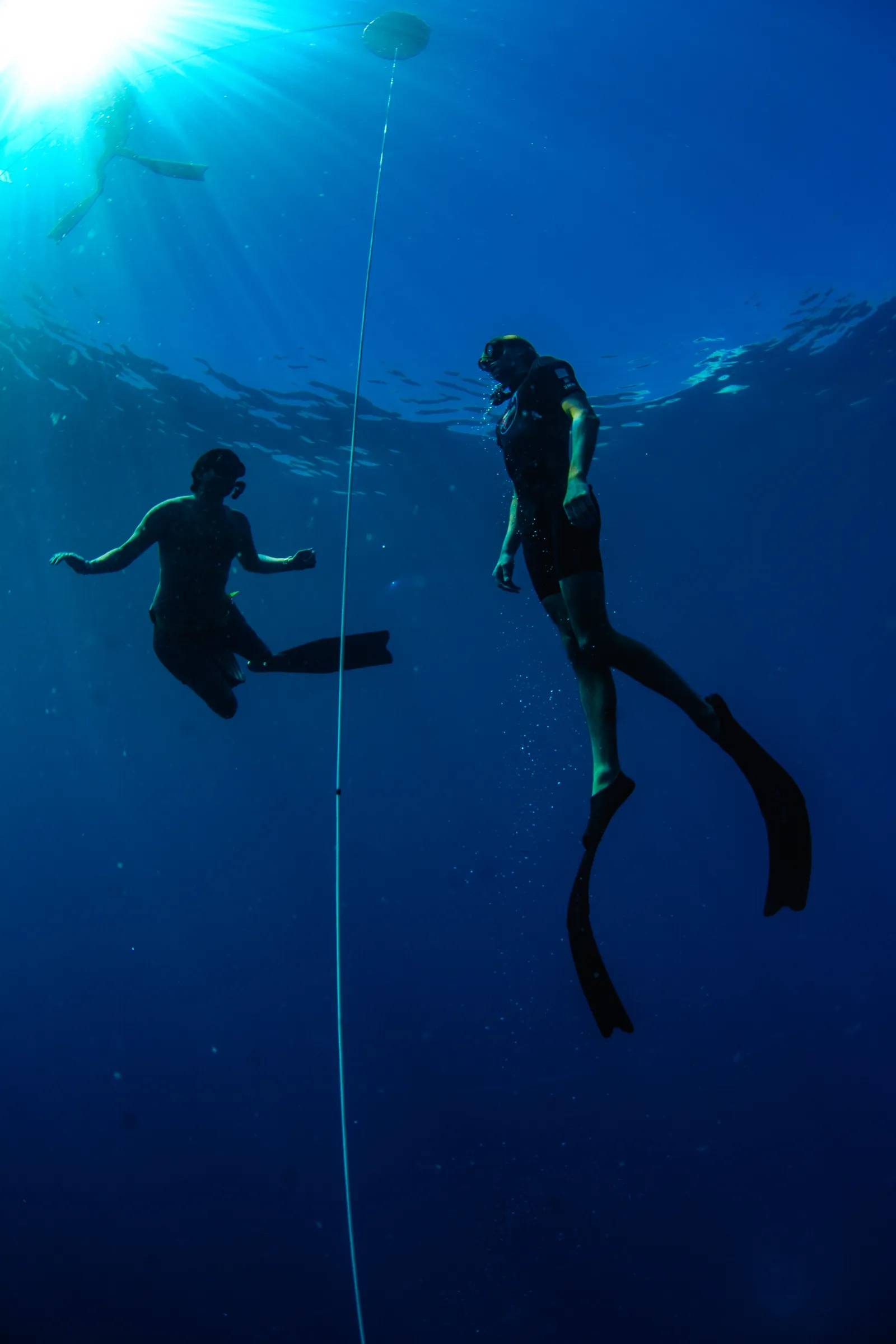
What a freediving day looks like
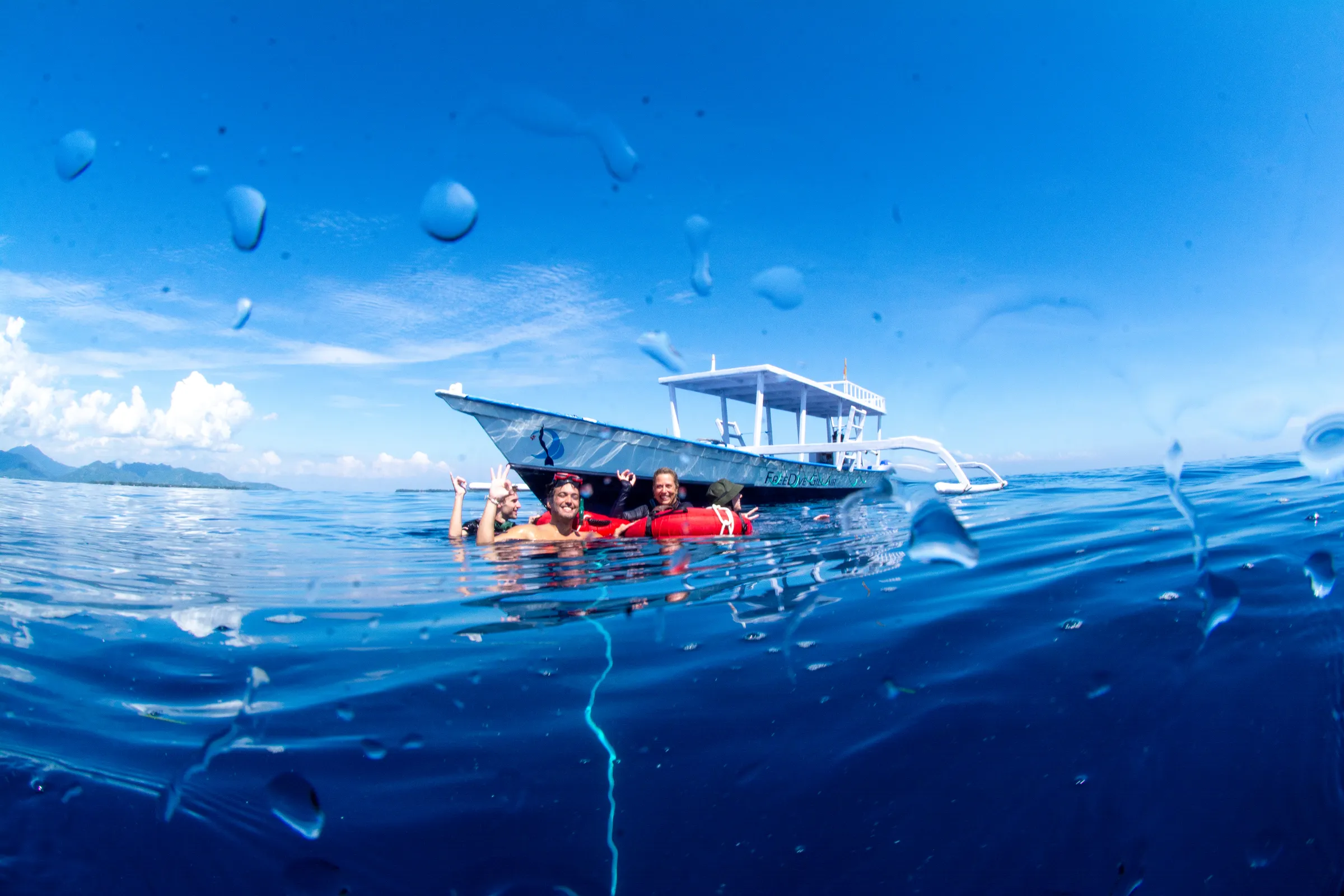
Mornings are for the line, when the sea is usually at its calmest. You meet your instructor at the centre, talk through the plan, then a short boat ride takes you to the buoy. Two to three hours in the water, in small groups, then a debrief over coffee. Afternoons are yours: a nap, a swim, a sunset on the west coast. Many people say the slow rhythm of the island is half of their progress.
Before you book
- Medical: you fill in a short medical questionnaire. If you answer yes to anything on it (asthma, heart, ears, sinuses), bring a doctor’s clearance.
- A cold or blocked sinuses? Wait until it clears. Forcing your ears is never worth it.
- Equipment: included in every course and session: long fins, mask, wetsuit, weights.
- Insurance: dive accident cover (DAN or similar) is not mandatory, but we recommend it to every freediver.
Freediving is far more about letting go than about being athletic. If you can sit still, follow a calm voice and enjoy the water, you can learn. Write to us on WhatsApp or at freedivegiliair@gmail.com with your dates: we will build your days around the conditions.
Keep reading
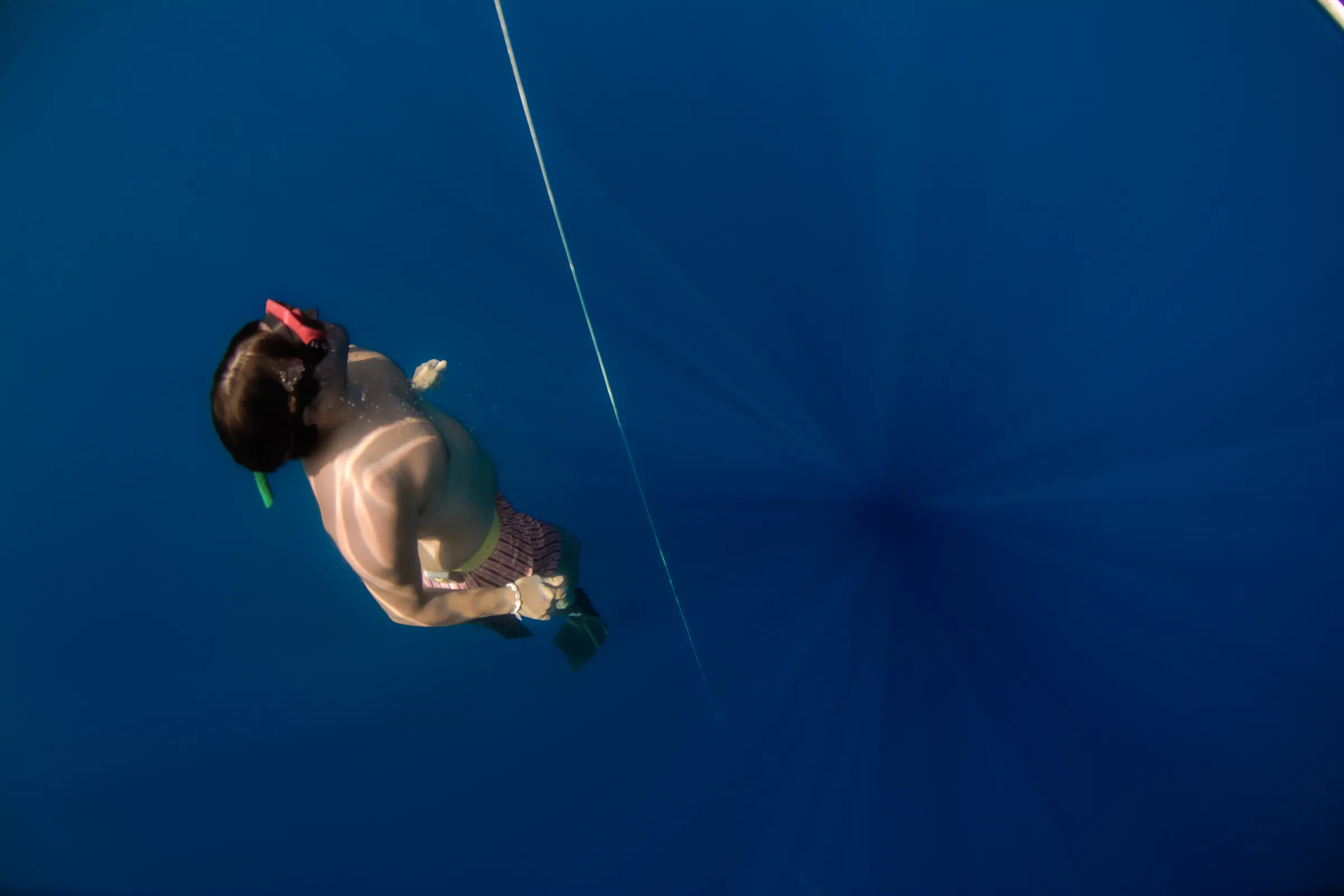
Your first freediving trial on Gili Air, step by step
When is the best time to freedive on Gili Air?
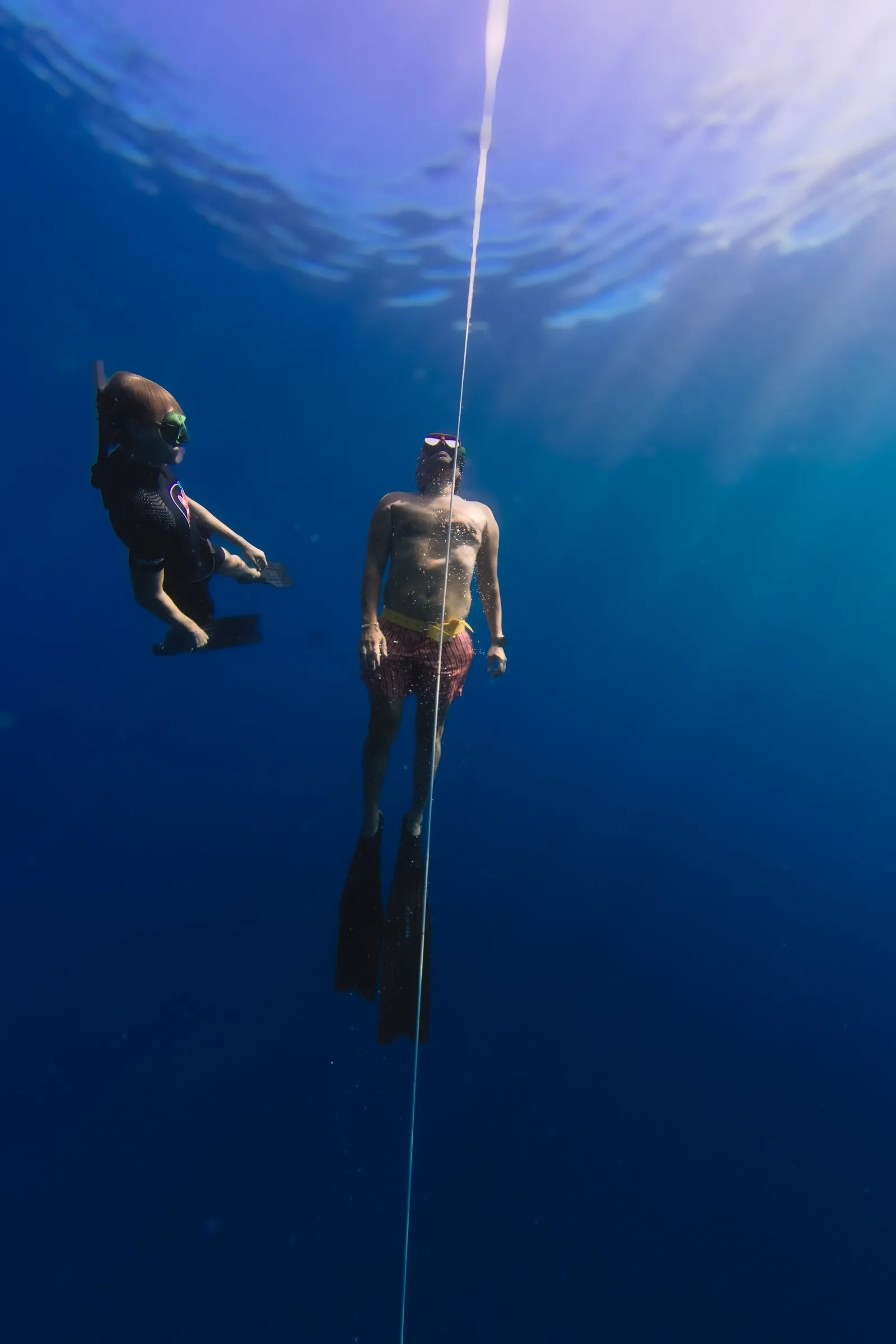
Is freediving for me? An honest answer
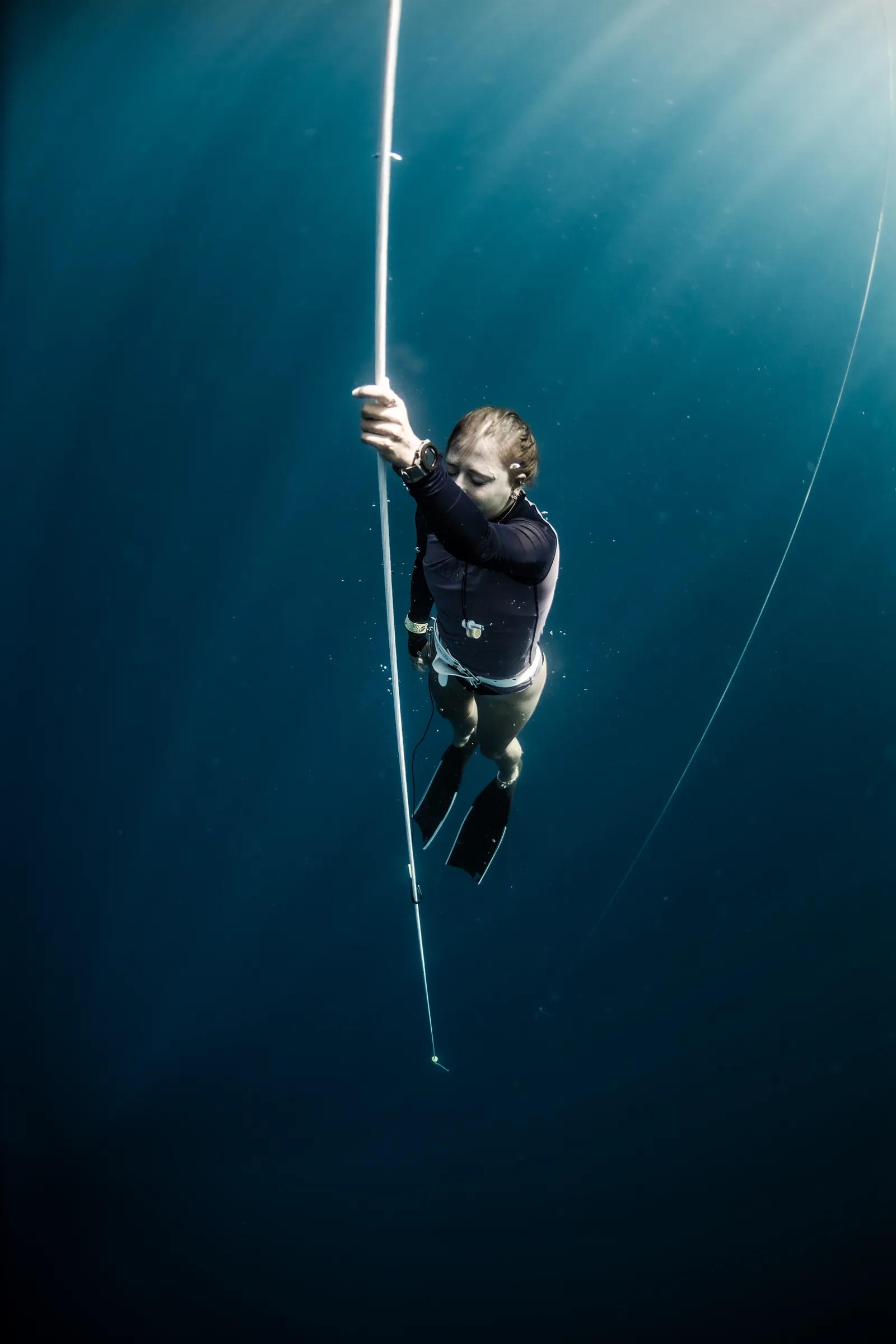
A freediving training week on Gili Air
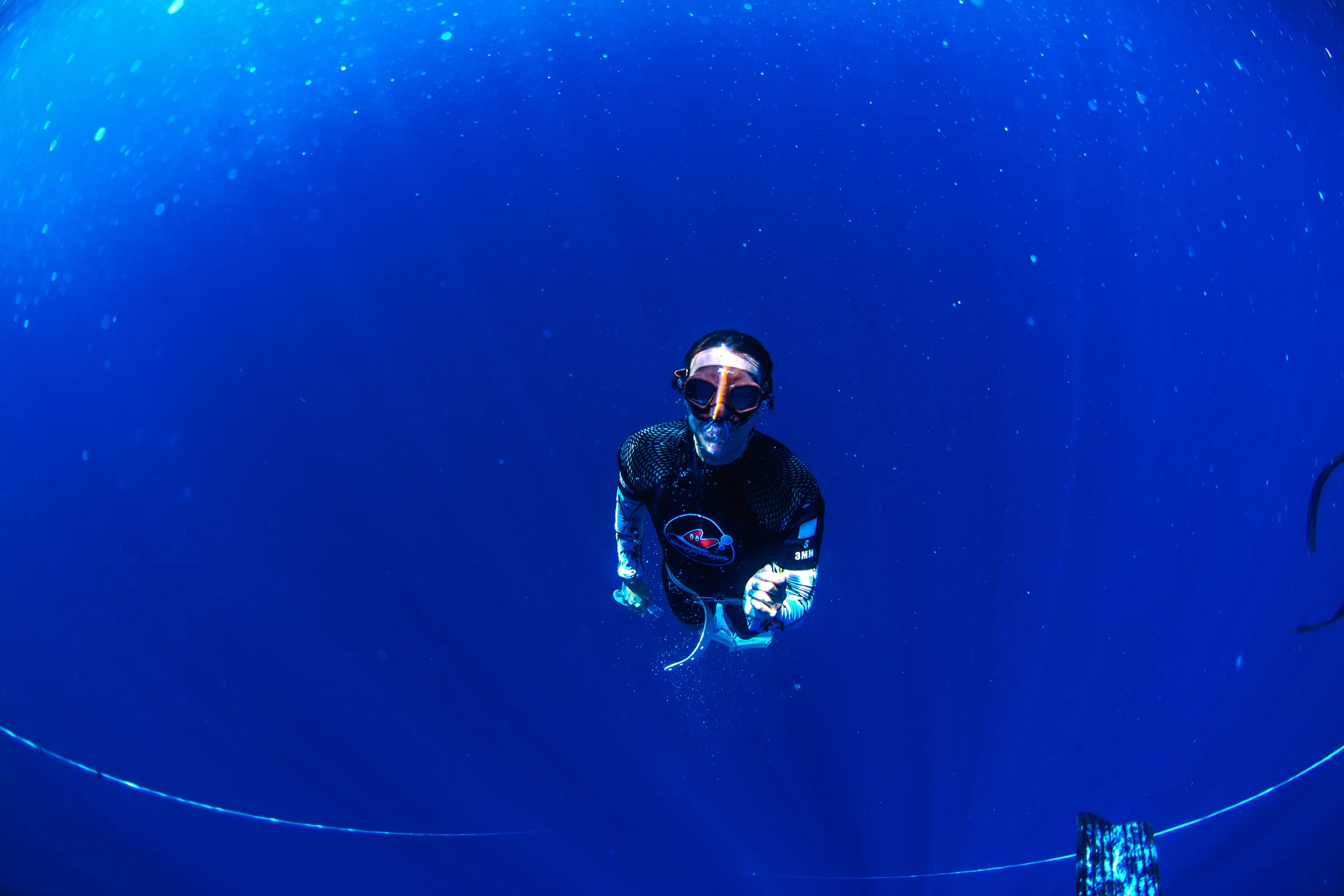
Freediving or scuba diving: which one is for you?
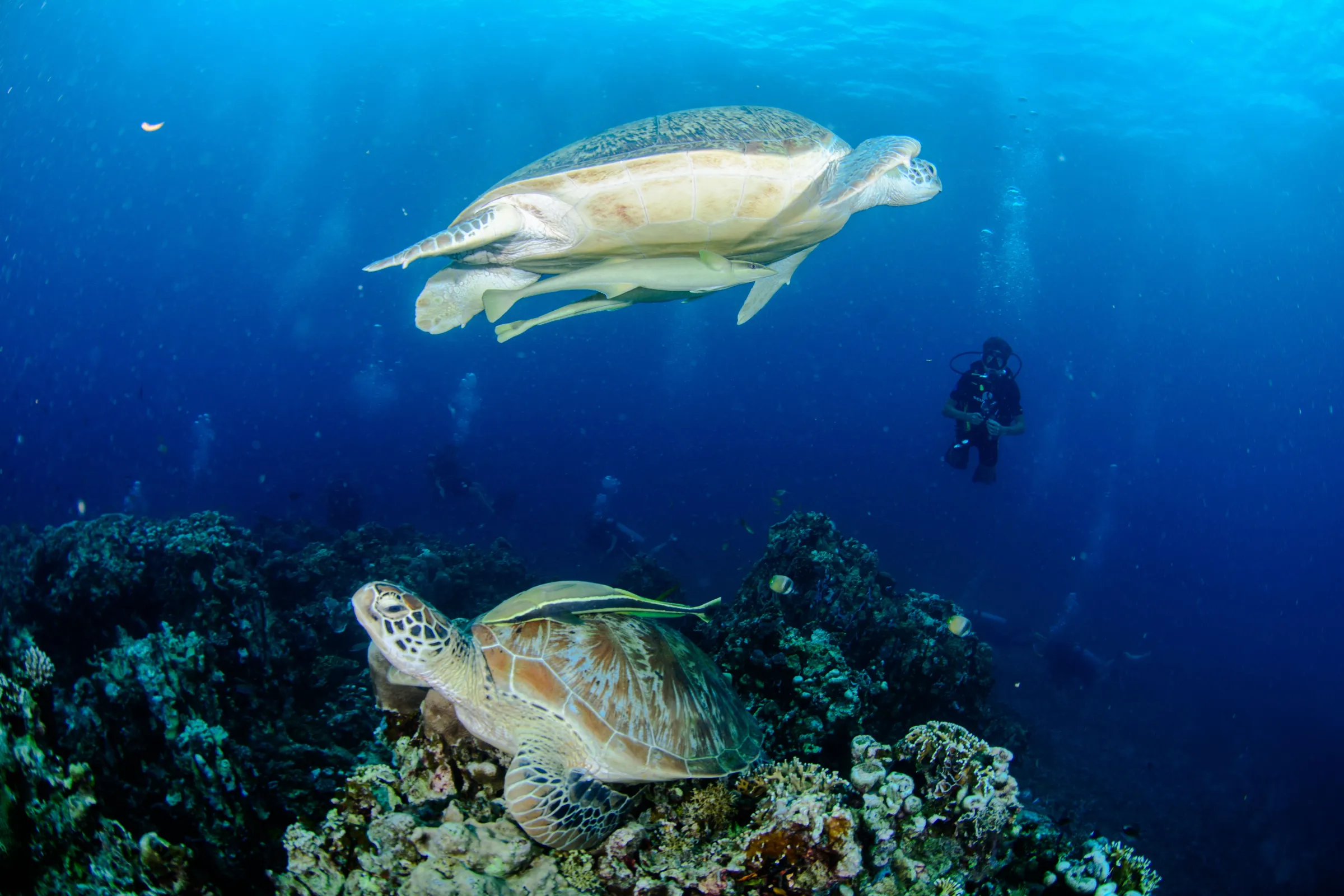
Freediving with turtles on Gili Air
The Indonesian Throughflow: the ocean current shaping every dive at the Gilis

Your first time diving: what a try dive on Gili Air is really like
Diving Gili Air month by month