
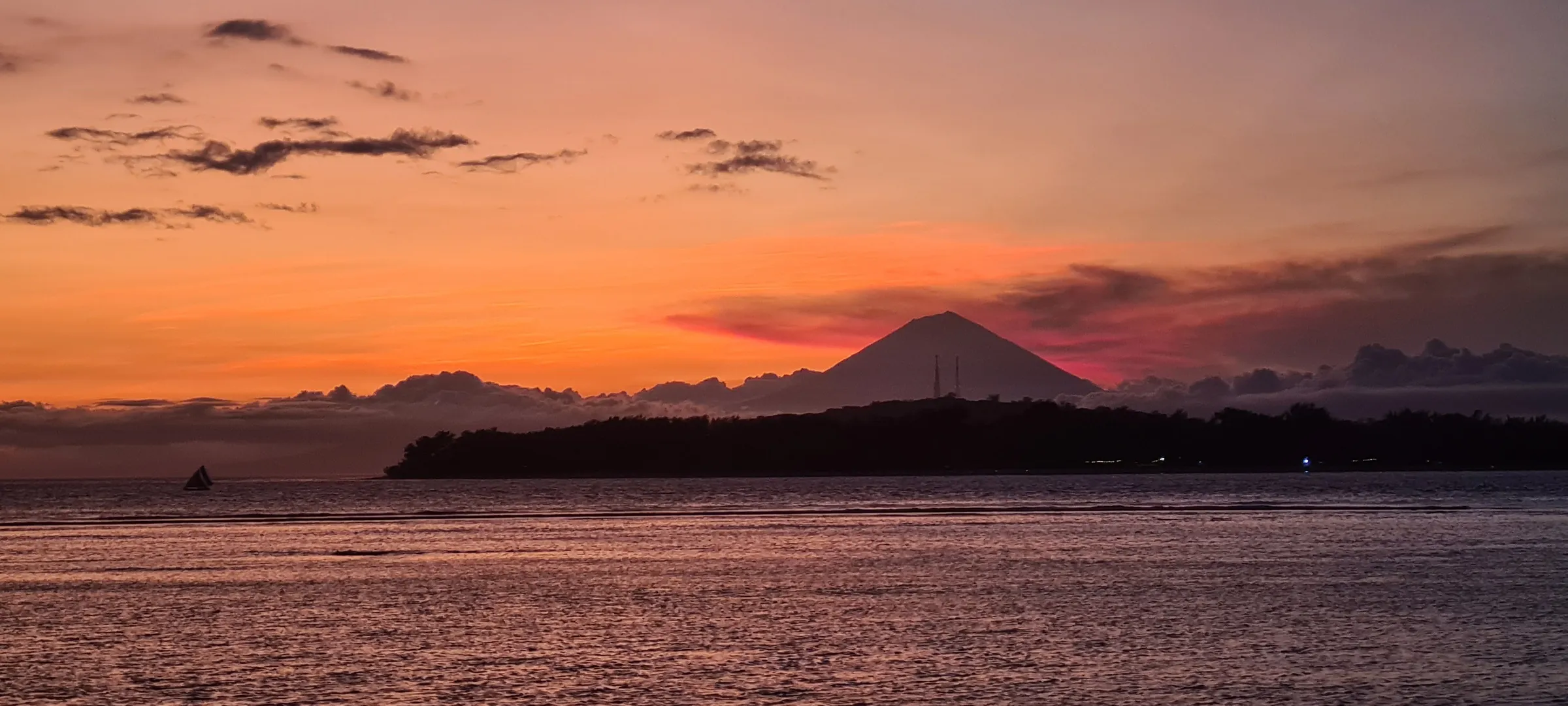
Fly from Bali to Lombok and you cross one of the sharpest wildlife boundaries on Earth — in barely 35 km of water. West of the strait, the forests hold Asian mammals and birds. East of it, on Lombok and beyond, an entirely different set of species takes over. This line has a name, a discoverer, and a very specific reason for running exactly where it does — right past the Gili Islands.
What the Wallace Line actually is
In the 1850s, British naturalist Alfred Russel Wallace — working in the region a decade before Darwin published On the Origin of Species — noticed something odd while cataloguing wildlife across the Indonesian archipelago. Islands that looked identical and sat close together could carry completely different animals. Bali had tigers, leopards and monkeys typical of mainland Asia. Lombok, barely a day’s sail away, had none of that — but it did have cockatoos, honeyeaters and marsupial-adjacent species that belonged to a different biogeographic world entirely, the one that stretches on toward New Guinea and Australia.
Wallace traced the boundary to a single channel: the Lombok Strait. It’s still called the Wallace Line today, and it is one of the clearest biogeographic borders anywhere in the world. Spend a few nights on Gili Air and you’ll likely hear it before you understand it — the sulphur-crested cockatoos calling from the trees are an Australasian sound that simply doesn’t exist across the water in Bali.
Why the line sits exactly here
The reason isn’t climate or distance — it’s depth. During the ice ages, sea levels dropped low enough to join Bali, Java, Sumatra and mainland Asia into one connected landmass (the Sunda Shelf), letting land animals walk across what are now separate islands. The Lombok Strait never joined that landmass, because it’s a genuinely deep channel — deep enough that it stayed open water even at the lowest ice-age sea levels. Nothing could walk across it. Only species that could fly, swim, or raft across on floating debris ever made it from one side to the other, which is exactly why Lombok’s wildlife looks so different from Bali’s despite the short distance.
Does the line apply underwater, too?
Here’s the honest nuance: not in the same clean way. Reef fish, coral and invertebrate larvae disperse on ocean currents over distances no land animal could ever cross, and the Gilis sit inside the Coral Triangle, a region of marine biodiversity that doesn’t respect Wallace’s boundary nearly as strictly as the birds and mammals above the waterline do. You won’t find a hard species cut-off on the reef the way Wallace found one in the forest.
What the same deep channel does explain is the diving itself. The Lombok Strait is one of the narrowest, swiftest exit routes for the Indonesian Throughflow — the vast transfer of water from the Pacific into the Indian Ocean that runs through the archipelago (we’ve written a full piece on exactly how that works and what it means in the water). The same depth and geometry that kept Wallace’s animals apart is what squeezes a huge volume of moving water through a narrow gap — which is the real reason currents at sites like Shark Point can run from a lazy drift to genuinely strong on a new or full moon.
What it actually means for your dive
Nothing changes about how you book or plan a dive here — our guides already read the tide and moon phase before every trip, the same way they do regardless of what’s swimming past. But it’s a nice piece of context to have in your head on the boat ride out: the same narrow, deep strait responsible for the current pulling you along the reef is the reason the birdsong on Gili Air sounds nothing like it does in Bali, barely 35 km away.
Curious what else shapes conditions here through the year? Our month-by-month guide to diving Gili Air covers the seasonal side; the best dive sites guide covers where to actually use this.