Medications — what's safe to dive with
Stugeron (cinnarizine) — most widely-used among divers; effective for 8 hours without drowsiness. Sold over-the-counter in Indonesia and most of Europe; not available in the US. Bonine / Antivert (meclizine) — slightly more drowsy than Stugeron, still considered dive-compatible by DAN. Dramamine (dimenhydrinate) — strong drowsiness; *not recommended* before diving because of impaired situational awareness. Scopolamine patches — effective but have side effects (dry mouth, vision changes) that complicate underwater orientation. Try any new medication on dry land first.
Why Gili Air is gentler than most dive destinations
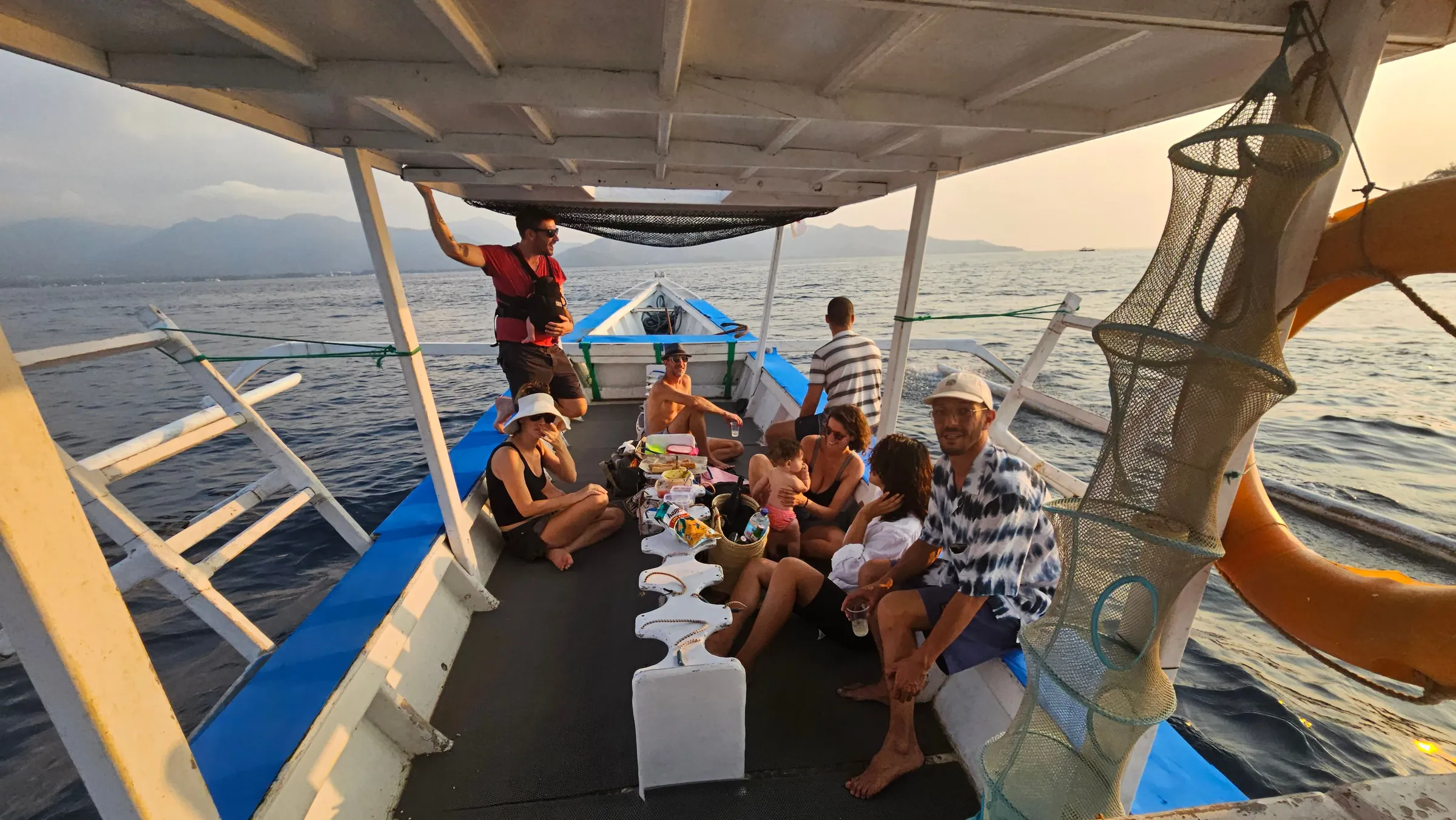
Three structural advantages: short boat rides (5-15 min) — symptoms barely have time to develop, calm protected waters — the reefs sit between Gili Air and Lombok's northwestern coast, sheltered from open-ocean swell, morning departures — winds are weakest 06:00-10:00 when we run most courses. Compare to a Komodo liveaboard where you're on a moving boat 24/7 for 7 days. If you're prone to motion sickness but want to dive Indonesia, Gili Air is statistically your easiest option.