
Tauchplatz
Kecinan Seahorse Bay
- Tiefe
- 3-25m
- Niveau
- beginner
- Boot ab Gili Air
- 5–15 min
Kecinan Seahorse Bay ist eine sichelförmige Muck-Diving-Bucht an der Nordwestküste von Lombok, in etwa 30 Minuten per Boot von Gili Air erreichbar. Der Spot bietet eine völlig andere Unterwasserwelt als die Riff-Tauchgänge der Gili-Inseln: ein weißer Sandhang, am flacheren Ende mit ausgedehnten Seegrasweiden bedeckt, der über Weich- und Hartkorallen-Flecken zu offenem Sand mit verstreutem Geröll in der Tiefe übergeht — das ideale Habitat für eine atemberaubende Vielfalt kryptischer und Makro-Arten.
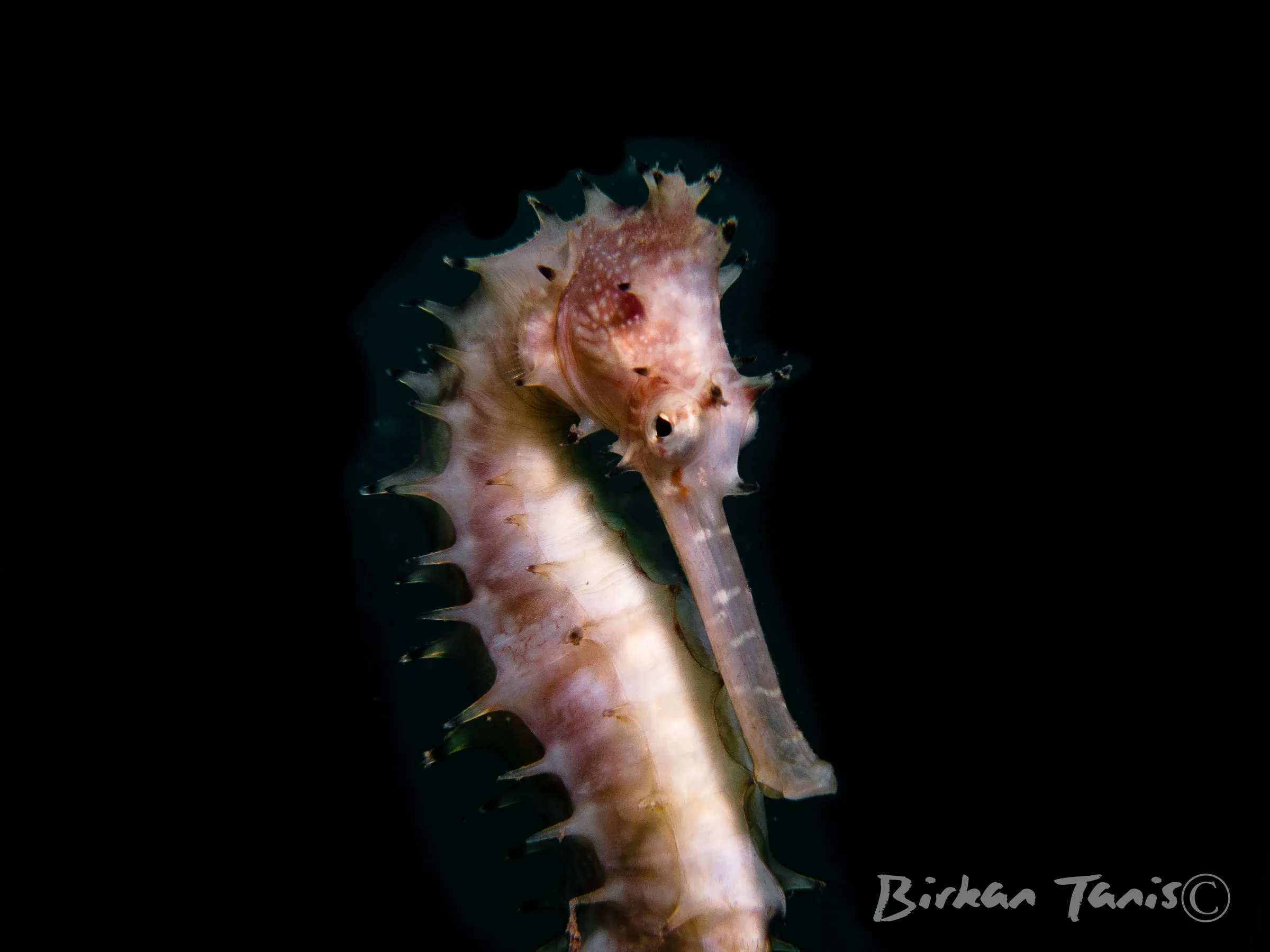
Der Spot trägt seinen Namen aufgrund einer Seepferdchen-Population, die nach indonesischen Maßstäben wirklich außergewöhnlich ist. Drei Arten — Gewöhnliches, Zebra-Schnauzen- und Dorniges Seepferdchen — haben etablierte Territorien im Seegras und an Korallenzweigen, und mehrere Tiere können in einem Tauchgang gefunden werden. Harlekin- und Seegras-Ghost-Pipefish sind zuverlässig präsent und schweben in der jeweiligen farblich angepassten Form in der Nähe von Federsternen und Seegrasfontänen. Frogfish besetzen Geröllbereiche in vielfältigen Farbvarianten. Der Spot ist einer der konstantesten in Lombok für den Mimik-Oktopus — ein Meister der Verstellung, der Plattfische, Feuerfische und Seeschlangen nacheinander imitiert. Blauring-Oktopusse werden hier oft genug gefunden, dass Guides wissen, im flacheren Geröll genau hinzusehen. Flamboyant-Sepias — die auf dem Sand laufen statt zu schwimmen — sind ein wiederkehrendes Highlight. Rhinopias (Pseudo-Skorpionsfische) erscheinen gelegentlich, weshalb Kecinan zum Anziehungspunkt für ernsthafte Makro-Fotografen wurde.
Der Spot hat keine nennenswerte Strömung und die Sicht beträgt typischerweise 10-20 m, in der Regenzeit (November-März) manchmal weniger, wenn Abflüsse vom Land die Klarheit reduzieren. Ganzjährig betauchbar, am besten April-Oktober.
Tauchertipps: Das ist ein langsamer, suchender Tauchgang — plane 60-70 Minuten und decke einen kleinen Bereich sehr sorgfältig ab, statt schnell zu schwimmen. Erfahrene Guides kennen die aktuellen Seepferdchen-Territorien; verlass dich auf ihr Wissen, statt umherzuwandern. Tarierungs-Kontrolle ist über dem Seegras entscheidend, um keine Halme zu brechen und keine ansässigen Fische zu stören. Perfekt für Fotografen jedes Niveaus: Die Motive sind langsam und die Tiefe ist gnädig.
Hier gesehene Meereslebewesen
- Gewöhnliche Seepferdchen
- Zebra-Schnauzen-Seepferdchen
- Dornige Seepferdchen
- Harlekin-Ghost-Pipefish
- Seegras-Ghost-Pipefish
- Frogfish
- Mimik-Oktopus
- Blauring-Oktopus
- Flamboyant-Sepia
- Rhinopias (selten)
- Steinfisch
- Gartenaale
- Nacktschnecken