
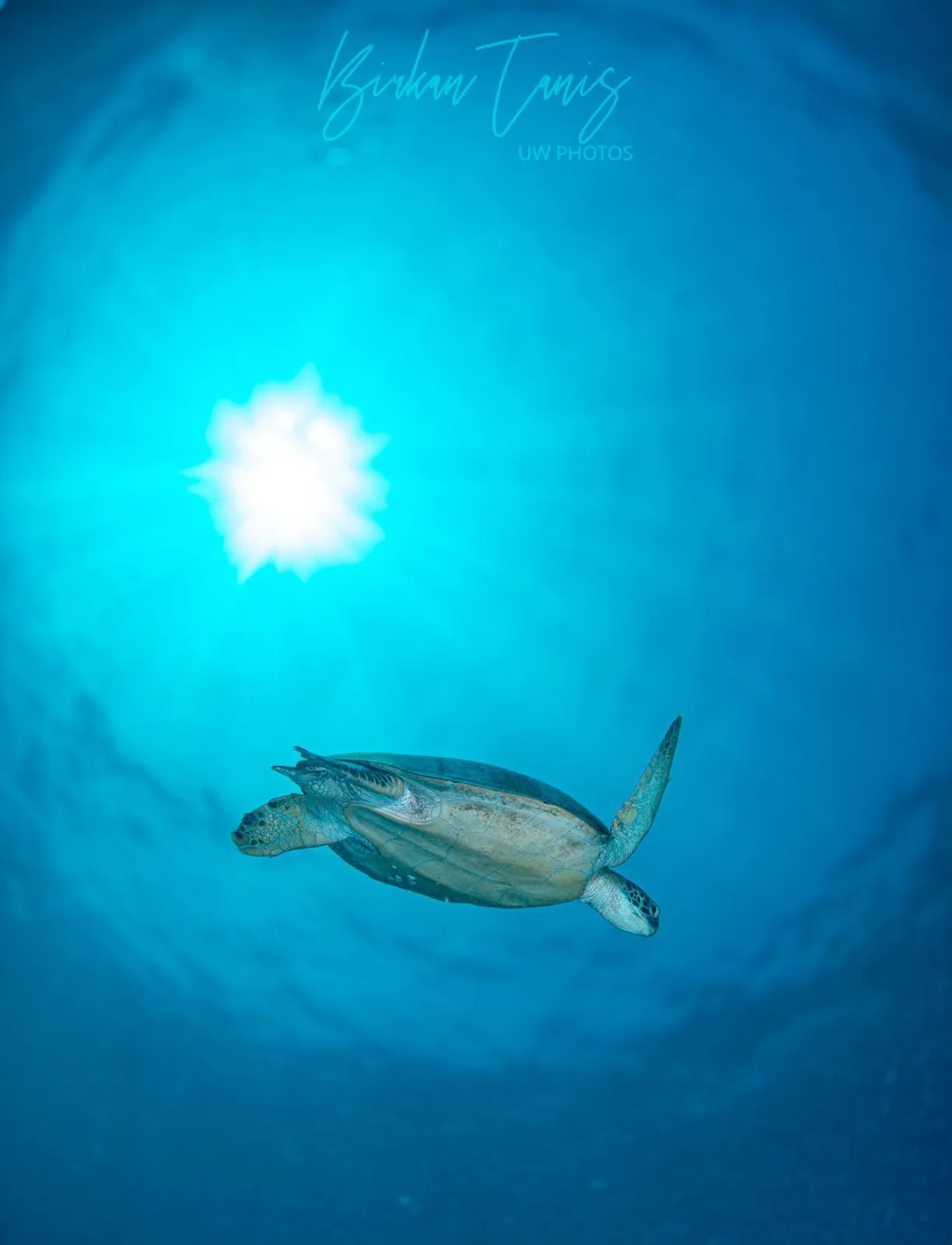
In dem Moment, in dem eine grüne Meeresschildkröte in fünf Metern Tiefe an dir vorbeigleitet — die Augen auf gleicher Höhe mit deinen, gleichgültig gegenüber deiner Anwesenheit, hundert Kilogramm uraltes Tier auf seinem Morgenspaziergang — hörst du auf, an deinen Luftverbrauch zu denken. Das sind die Gili-Inseln.
Diese drei kleinen Inseln vor der Nordwestküste Lomboks beherbergen eine der höchsten residenten Meeresschildkröten-Dichten in indonesischen Gewässern. An einem normalen Tauchtag von Gili Air aus ist mindestens eine Begegnung fast garantiert. An einem guten Tag hörst du bei acht auf zu zählen.
Zwei Arten, eine häufige Frage
Auf den Gilis leben sowohl grüne Meeresschildkröten (Chelonia mydas) als auch Echte Karettschildkröten (Eretmochelys imbricata). Taucher tun sich oft schwer, sie unter Wasser zu unterscheiden.
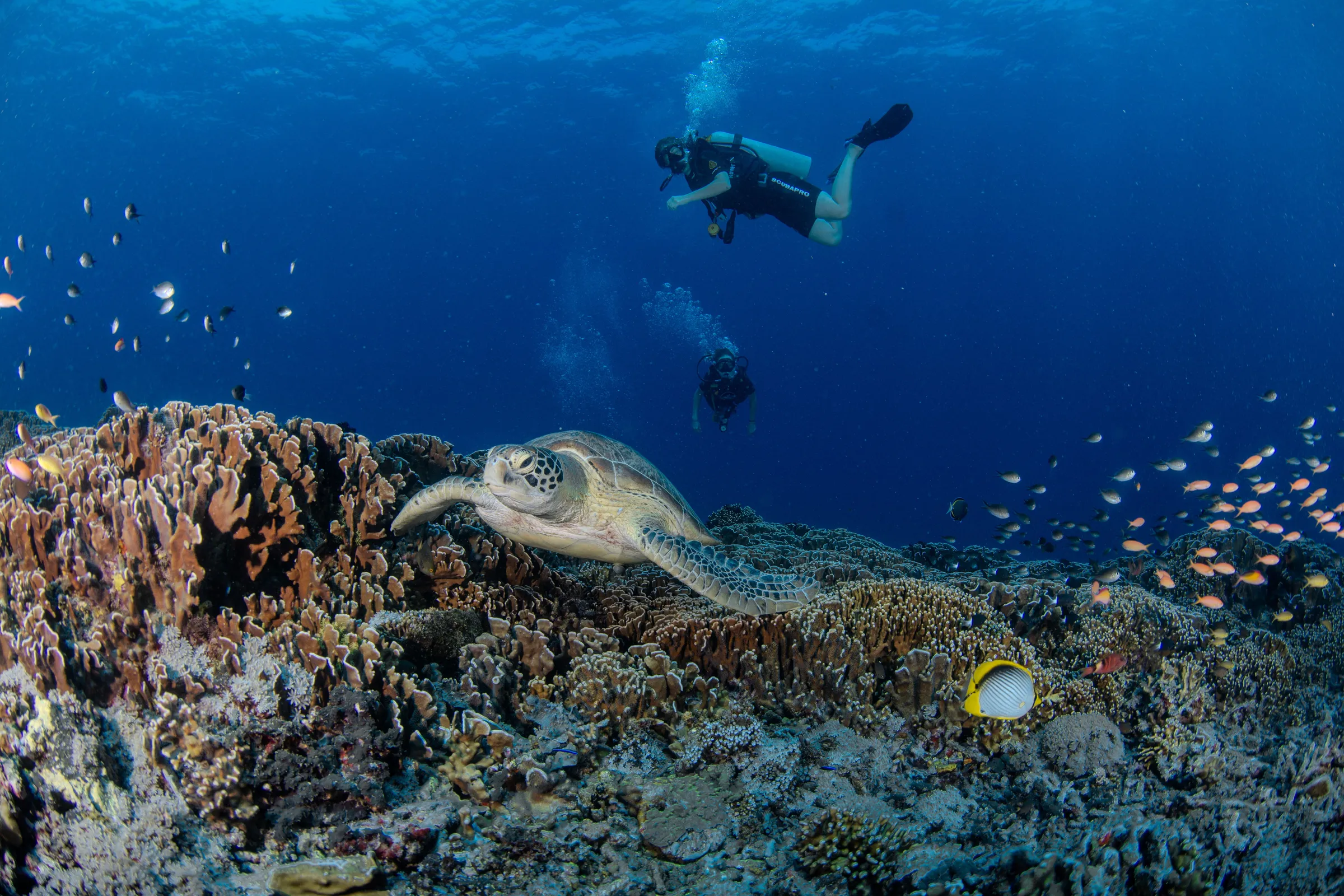
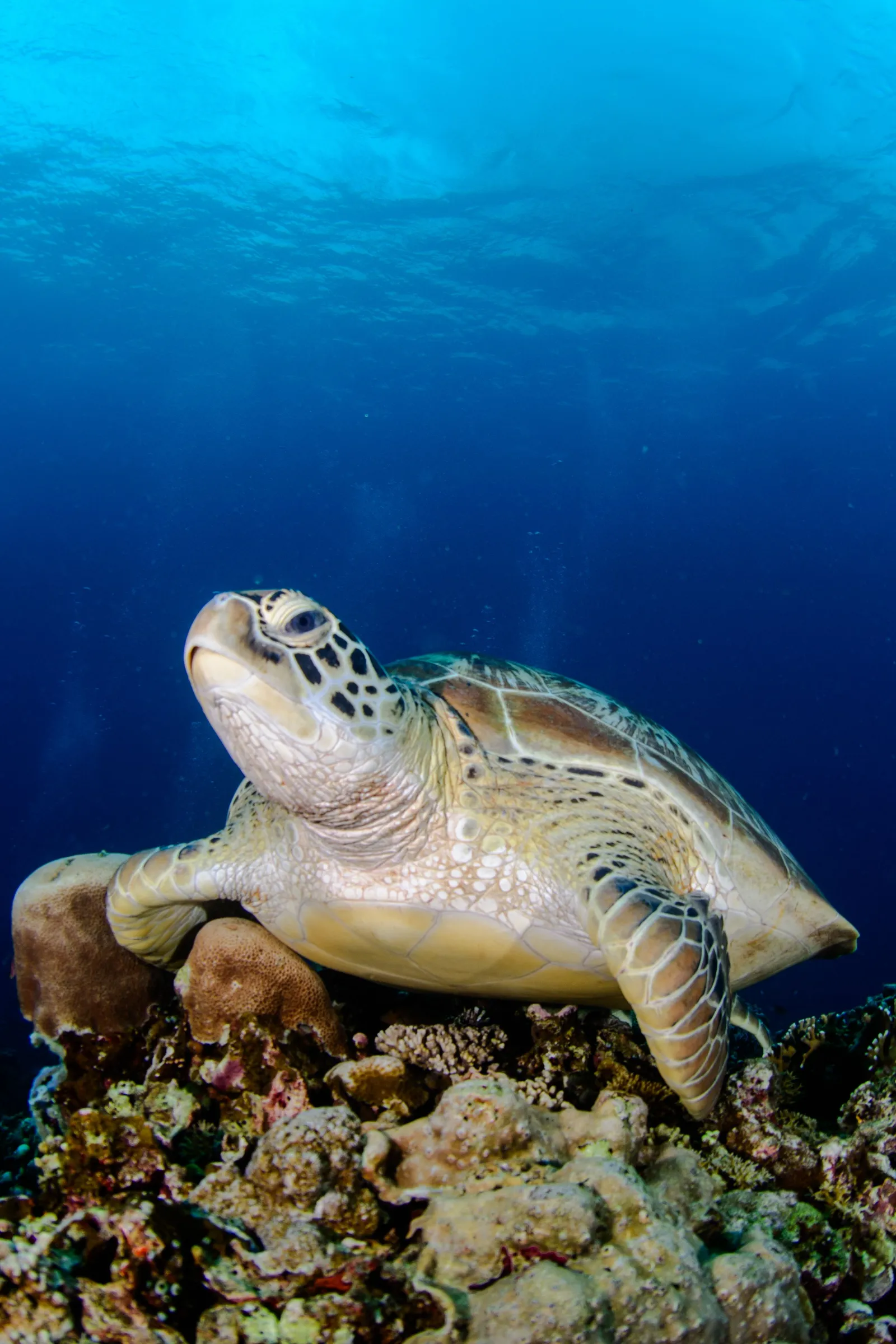
Die grüne Schildkröte ist das größere Tier — erwachsene Exemplare erreichen 100-150 kg mit einer Panzerlänge von fast einem Meter. Der Panzer ist glatt und braun-oliv, manchmal mit warmen Bernsteinstreifen; der Kopf ist klein und rund. Der Name ist irreführend: Der Panzer ist nicht grün. Das Fett darunter ist grün, durch ein Leben voller Seegras und Algen.
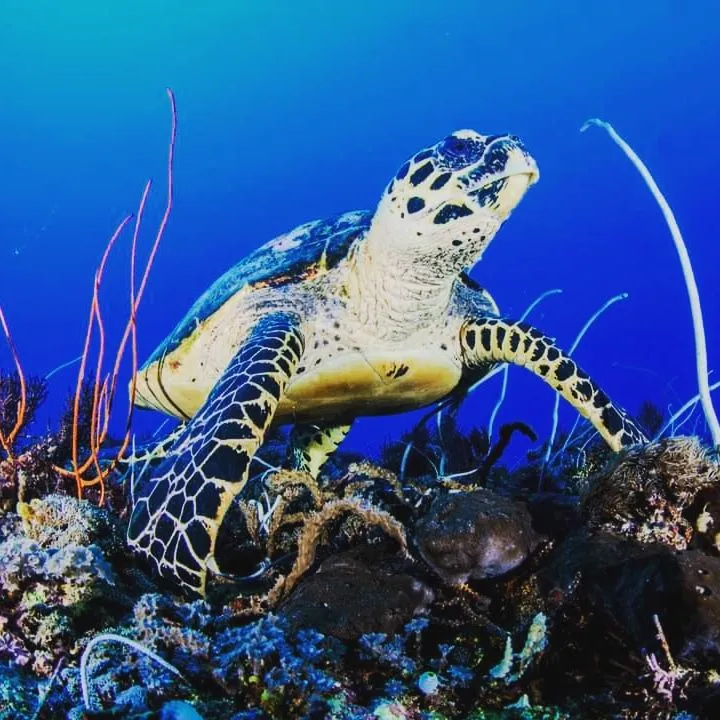
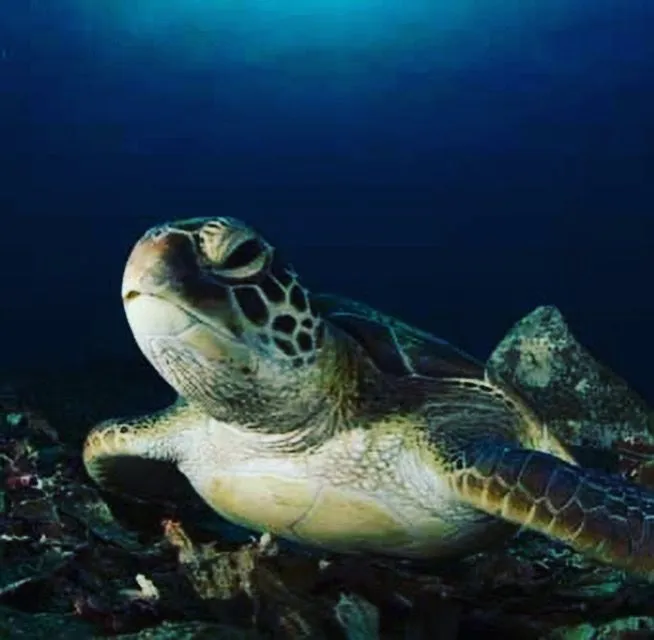
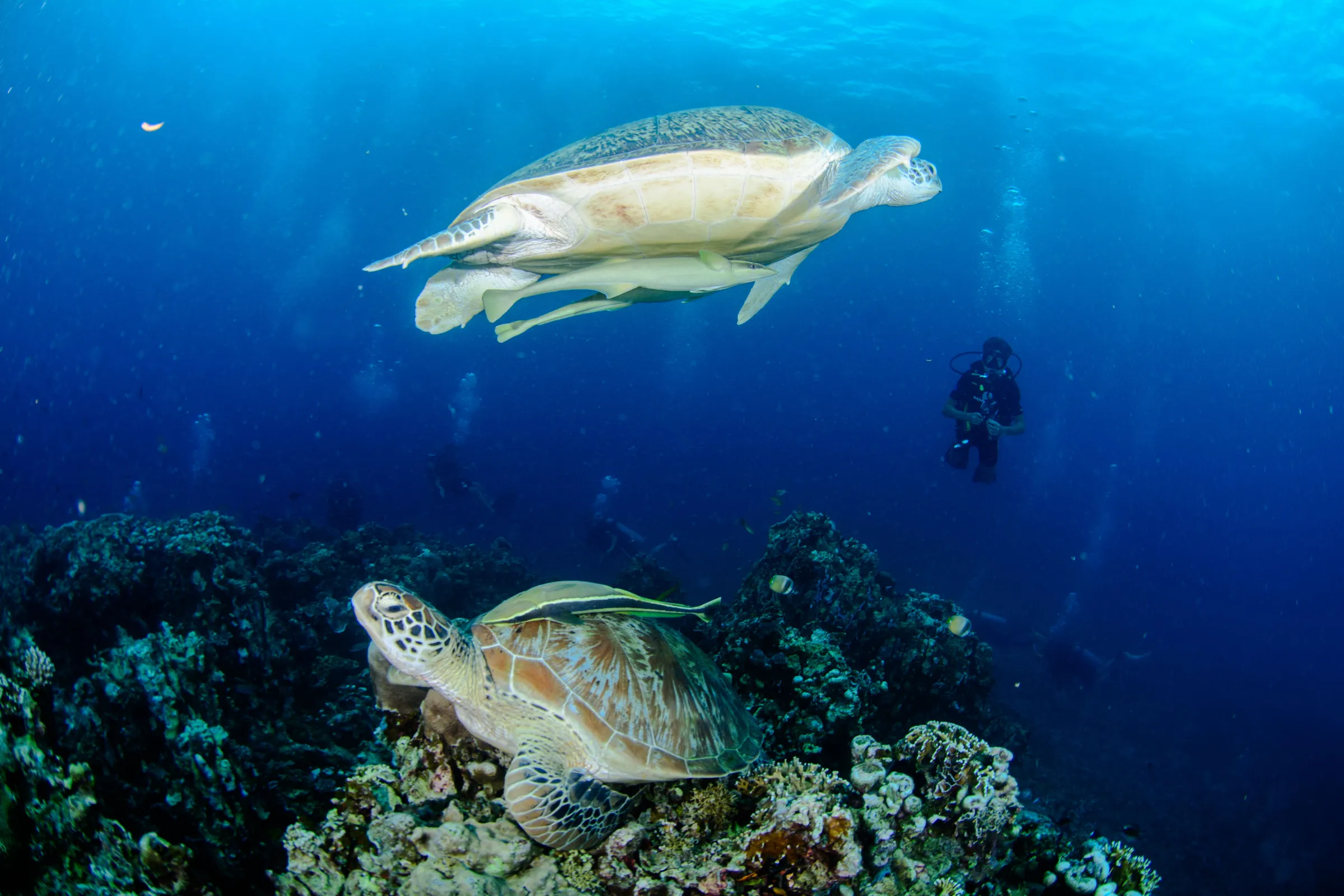
Die Echte Karettschildkröte ist kleiner und überschreitet selten 80 kg. Ihr Panzer ist steiler gewölbt, mit überlappenden Schildern in Kastanienbraun und Bernsteinfarbe gemustert, und der Kopf verjüngt sich zu einem spitzen Schnabel — dem “Habichtsschnabel” — den sie nutzt, um Schwämme aus Riffspalten zu picken. Karettschildkröten findest du in engerem Korallengelände; grüne Schildkröten bevorzugen offene Hänge mit guter Algenbedeckung.
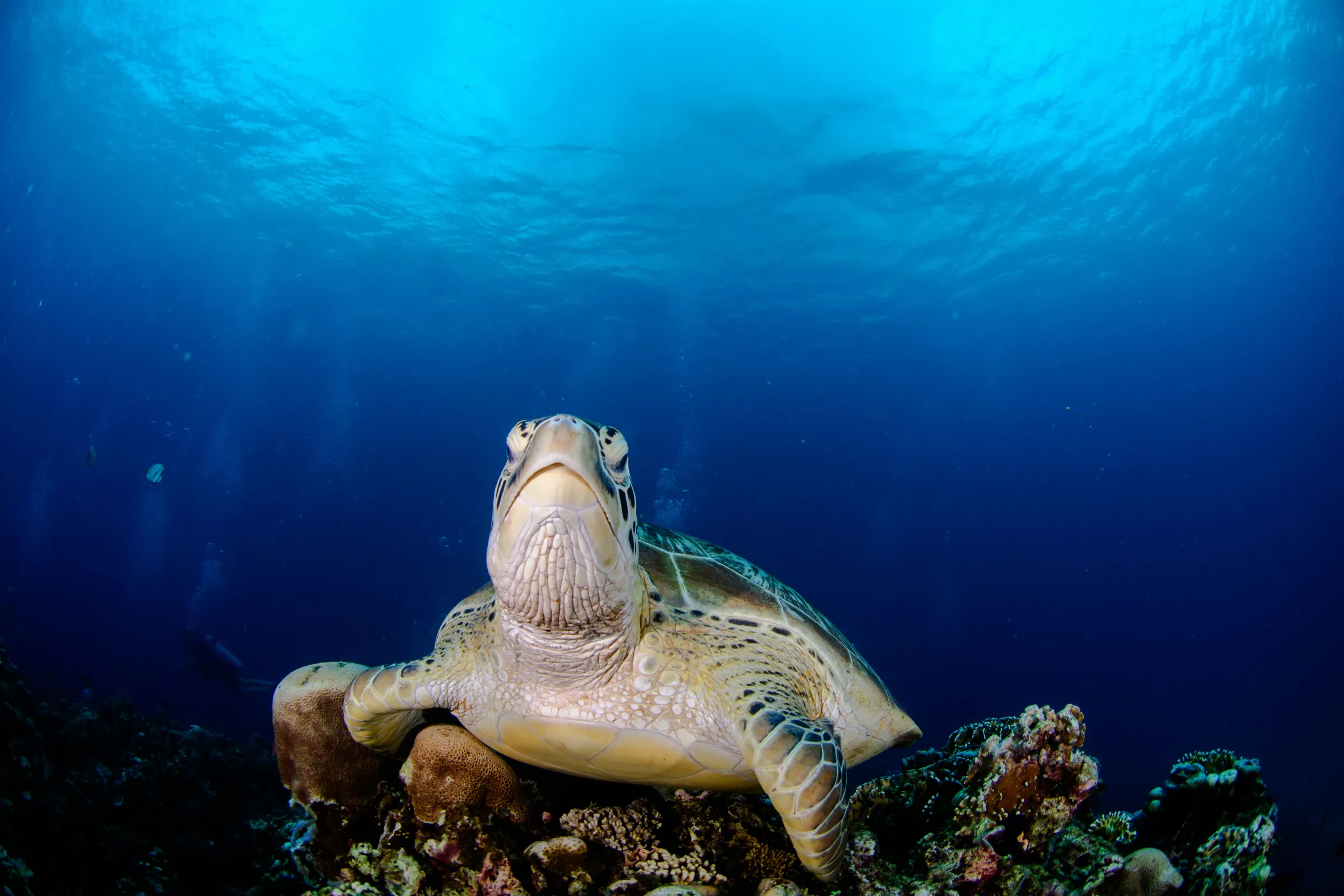
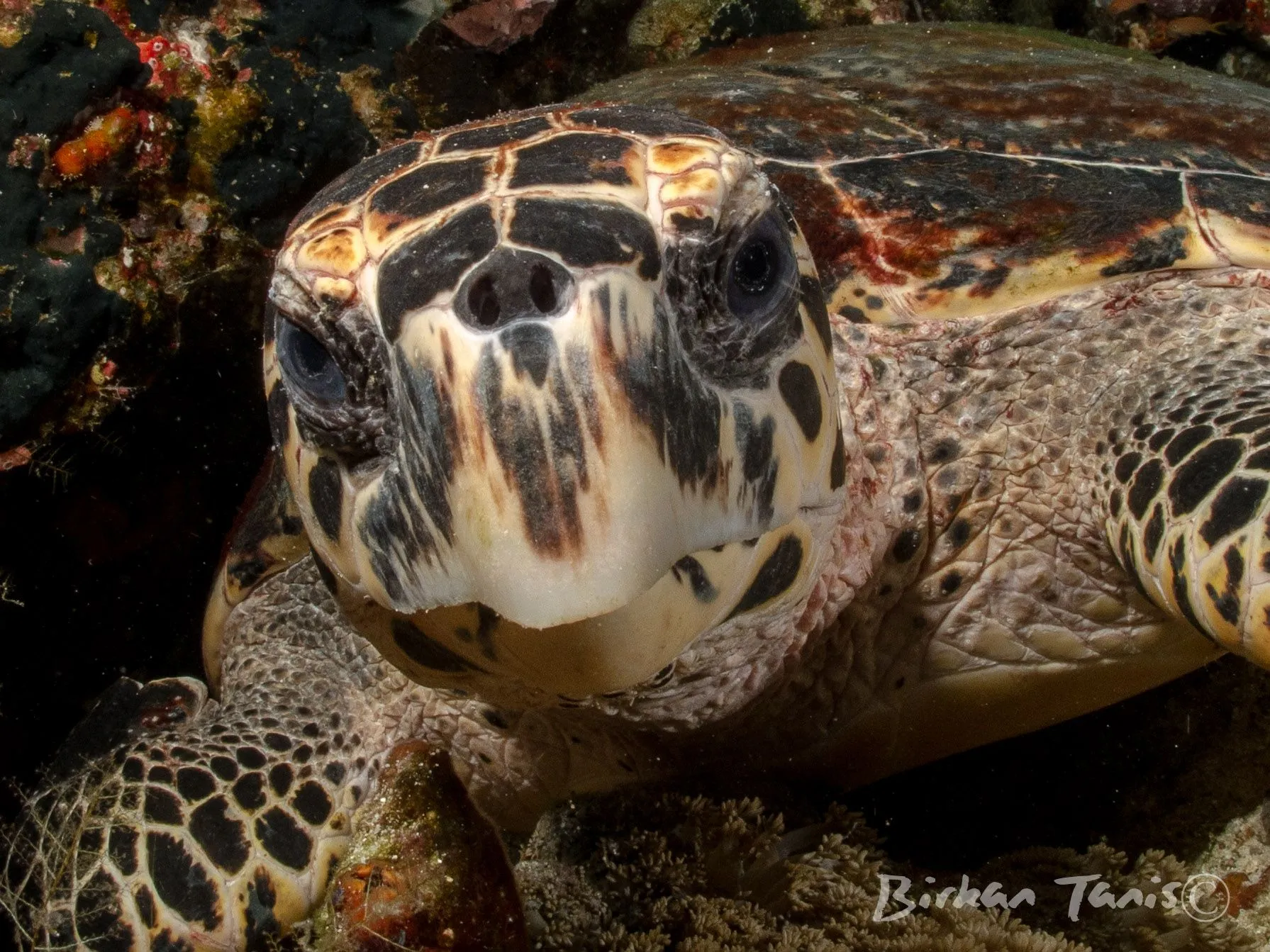
An Turtle Heaven an der Nordseite von Gili Meno begegnest du beiden Arten regelmäßig im selben Tauchgang.
Was sie da unten eigentlich tun
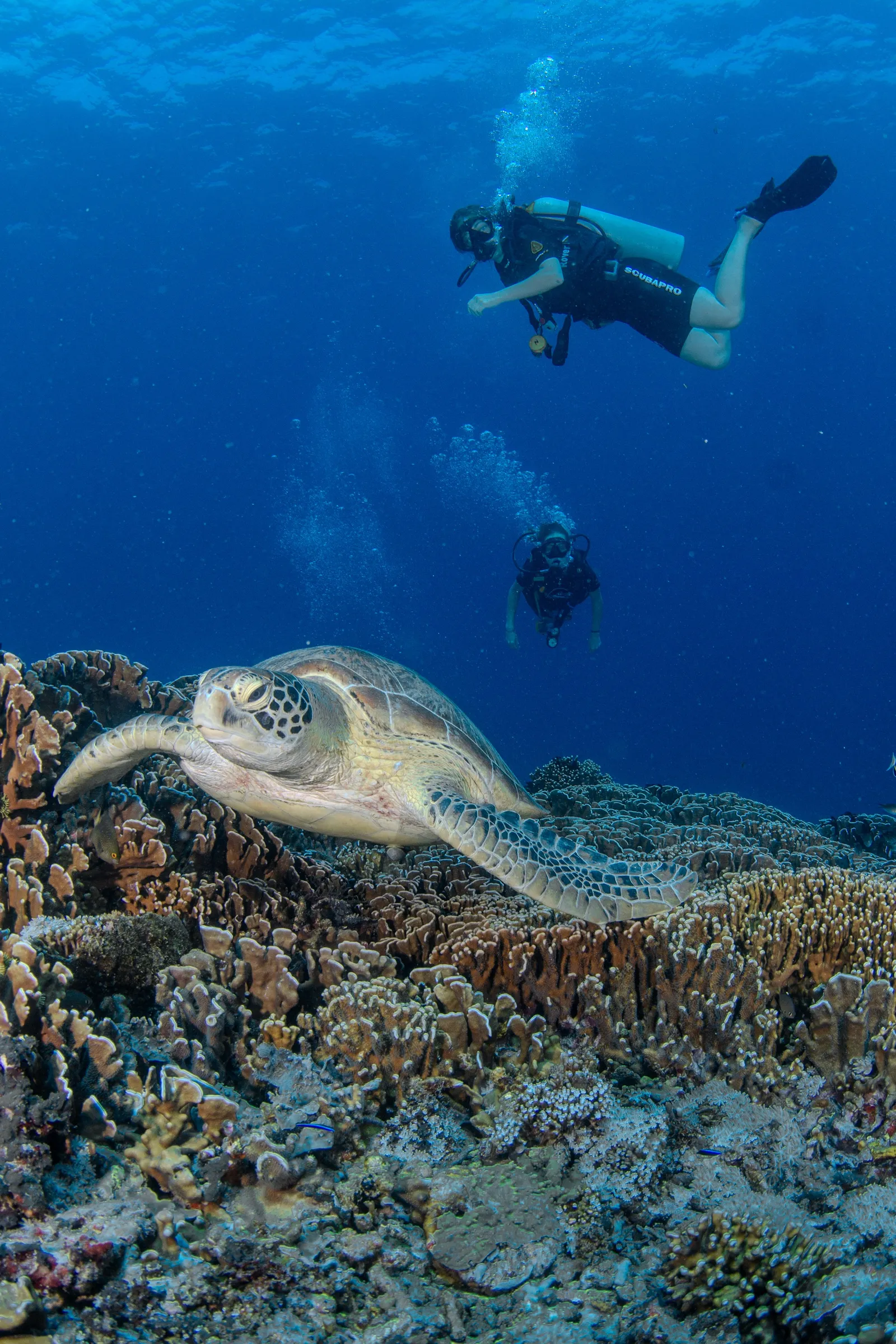
Die meisten Schildkrötenbegegnungen rund um die Gilis fallen in eines von drei Verhaltensmustern:
Fressen. Grüne Schildkröten weiden Algen von Korallenstöcken ab, wie eine Kuh ein Feld abgrast — methodisch, Kopf unten, völlig vertieft. Sie reißen Mundvoll von Rasenalgen vom harten Untergrund und hinterlassen kreisförmige Bissspuren, die nach ihrem Weiterzug leicht zu sehen sind. Karettschildkröten picken meist mit ihrem schmalen Schnabel Schwämme aus Spalten im Riff.
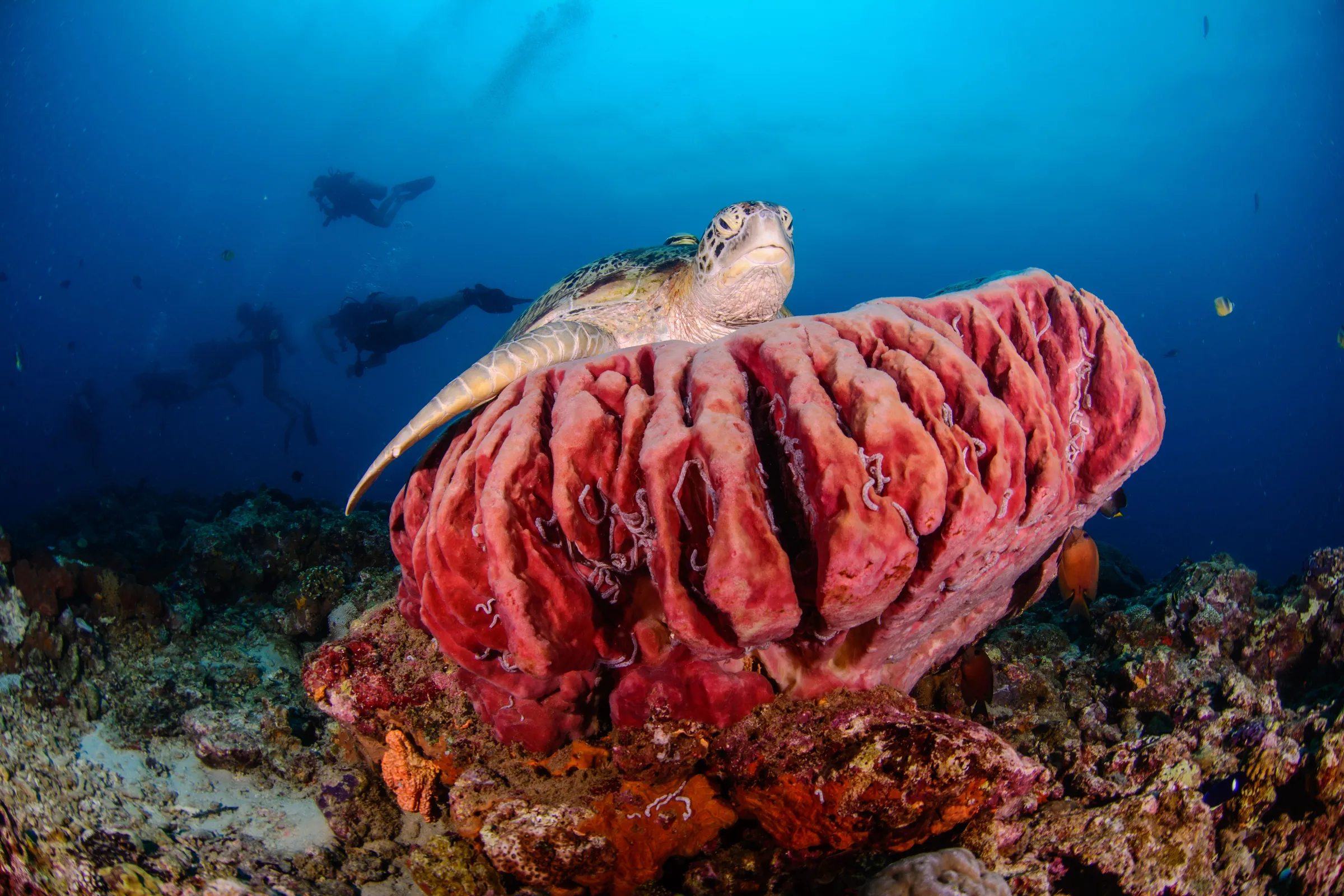
Ruhen. Schildkröten sind Reptilien. Sie können dem Wasser keinen Sauerstoff entnehmen und müssen zum Atmen auftauchen — aber zwischen den Auftauchgängen klemmen sie sich unter Korallenüberhänge oder lassen sich auf dem Sandgrund nieder und verlangsamen ihren Herzschlag dramatisch, um Sauerstoff zu sparen. Eine ruhende Schildkröte kann bis zu sieben Stunden die Luft anhalten. Wenn du eine unter einem Vorsprung verkeilt findest, ist sie nicht gefangen — sie schläft. Lass sie in Ruhe.
Putzen. Wie Riffhaie nutzen Schildkröten etablierte Putzerstationen, an denen Lippfische und andere Kleinfische Parasiten von ihrer Haut und ihrem Panzer abklauben. Eine Schildkröte, die regungslos mit ausgestreckten Flossen und gestrecktem Hals schwebt, befindet sich an einer Putzerstation. Eine Putzpause zu stören bedeutet, dass die Schildkröte mit den Parasiten weiterzieht, die sie hergebracht haben. Halte großen Abstand und beobachte aus der Entfernung.
Wo du sie findest
Schildkröten sind an fast jedem Tauchplatz rund um die Gili-Inseln zu Hause. Manche Spots sind verlässlicher als andere.
Turtle Heaven an der Nordseite von Gili Meno ist der konstanteste im Archipel. Zehn bis fünfzehn Schildkröten in einem Tauchgang sind hier normal; das abfallende Riff zwischen 10 und 22 Metern hat die Algenbedeckung und Korallenstruktur, die sie ansässig hält. Beide Arten fressen und ruhen über das Riff verteilt.
Hans Reef und Coral Fan Garden an der Südseite von Gili Air haben regelmäßig drei oder vier grüne Schildkröten, die Algen von algenbewachsenen Felsbrocken in flachem Wasser fressen. Beide sind Open-Water-Tiefen, ruhige Strömung und leicht zugänglich — gute erste Tauchgänge für jeden, der noch nie eine Schildkröte unter Wasser gesehen hat.
Shark Point und Sunset Point rund um Gili Trawangan beherbergen Schildkröten zusammen mit der ansässigen Riffhai-Population. Die tieferen Abschnitte um 18-25 m halten manchmal Karettschildkröten, die durch Korallenfächer picken.
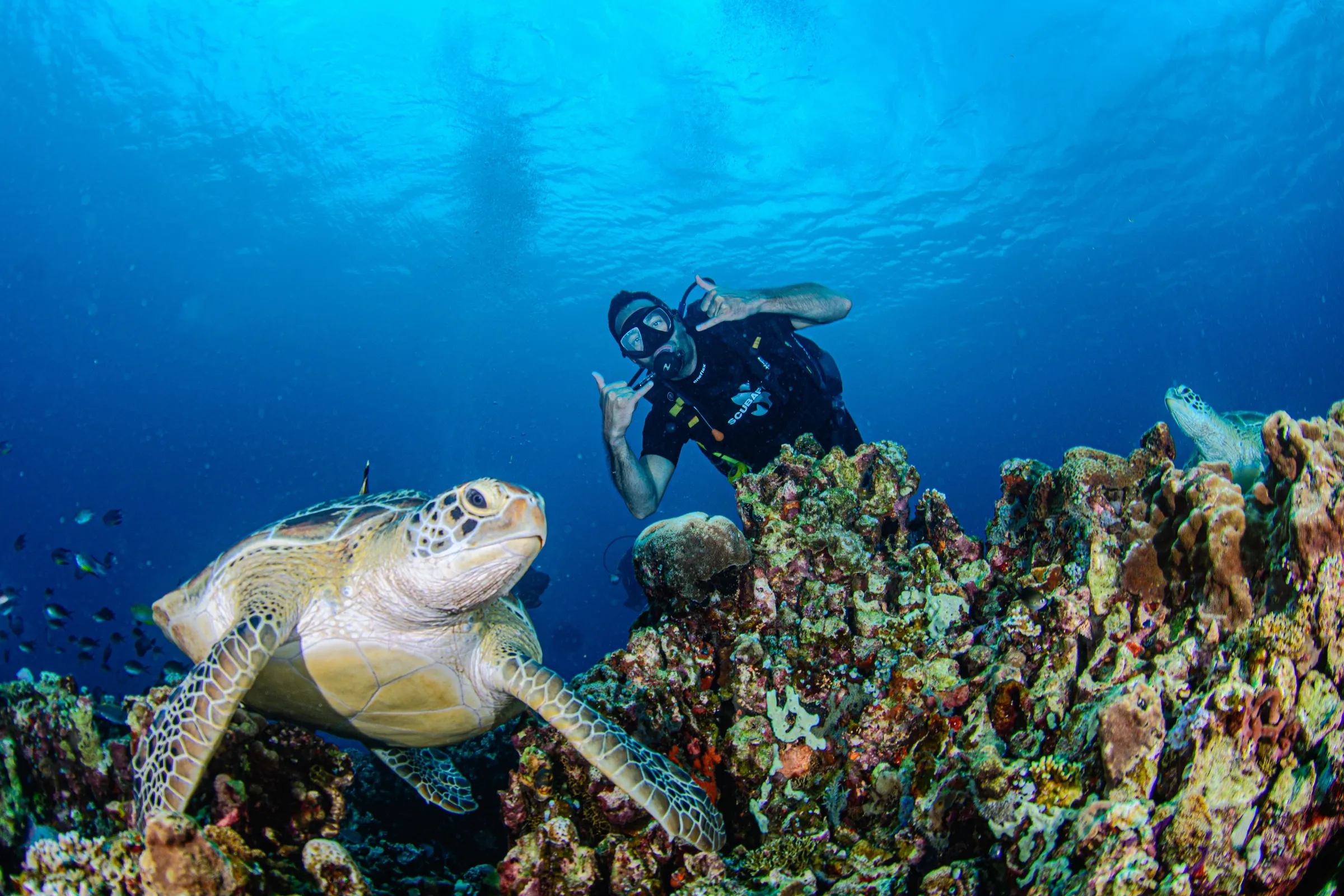
Schildkröten sind die Standarderwartung bei unseren Fun-Tauchgängen, nicht ein Bonus. Wenn wir einen besonders guten Morgen hatten — sechs Schildkröten in einem Tauchgang, eine Karettschildkröte an der Putzerstation, ein nistendes Weibchen an der Oberfläche — sagen es dir unsere Guides, bevor du ins Wasser gehst.
Männchen oder Weibchen? Das Unterwasser-ID-Spiel
Die meisten Taucher denken nie daran, das Geschlecht der Schildkröten zu prüfen, denen sie begegnen. Sobald du weißt, worauf du achten musst, dauert es etwa zwei Sekunden — und es ändert deine Lesart des Verhaltens des Tieres komplett.
Es gibt ein Hauptmerkmal, das jedes Mal funktioniert: der Schwanz.
Männchen haben einen langen, dicken Schwanz, der weit über die Hinterkante des Panzers hinausragt — manchmal fast so lang wie der Panzer selbst. Der Schwanz enthält das Fortpflanzungsorgan und ist der wichtigste anatomische Unterschied zwischen den Geschlechtern. Der Schwanz eines Männchens ist unmöglich zu übersehen, sobald du weißt, dass du danach suchst.
Weibchen haben einen kurzen, gedrungenen Schwanz, der kaum über die Rückseite des Panzers hinausragt. Wenn du kaum einen Schwanz sehen kannst, ist es fast sicher ein Weibchen.
Zwei sekundäre Hinweise helfen zur Bestätigung:
- Vorderflossenkrallen: Männchen haben eine vergrößerte, stark gekrümmte Kralle an jeder Vorderflosse, die sie nutzen, um beim Paaren am Panzer des Weibchens zu greifen. Weibchen haben kleinere, geradere Krallen.
- Gesamtgröße: Weibchen sind bei voller Geschlechtsreife etwas größer, was aber ohne Referenz schwer zu beurteilen ist.
Teste dich beim nächsten Tauchgang
Versuche, vor dem Auftauchen das Geschlecht jeder Schildkröte zu bestimmen, der du begegnet bist. So gehst du vor:
- Positioniere dich auf der gleichen Tiefe wie die Schildkröte, leicht seitlich und hinter ihr.
- Schau dir die Rückseite des Panzers an — ragt der Schwanz deutlich über die Kante hinaus oder ist er kaum zu sehen?
- Wenn du nah genug rangekommen bist, prüfe die rechte Vorderflosse auf die gekrümmte Kralle.
► Schnellreferenz: Männchen vs. Weibchen auf einen Blick
| Merkmal | Männchen | Weibchen |
|---|---|---|
| Schwanz | Lang — ragt weit über den Panzer, oft 30-50 cm | Kurzer Stummel — kaum über die Panzerkante hinaus |
| Vorderkralle | Eine verlängerte, gekrümmte Kralle pro Vorderflosse | Kürzere, einheitlichere Krallen |
| Verhalten | Versucht in der Paarungssaison (Juli-September) andere Schildkröten zu besteigen | Kommt während der Nistsaison nachts an Land, um zu nisten |
Auf den Gilis sind die meisten residenten Schildkröten, denen du bei einem Tageutauchgang begegnest, weiblich — Männchen halten sich in tieferen, offeneren Gewässern auf, außer in der Paarungssaison (etwa Juli bis September), in der du versuchte Besteigungen am Riff sehen kannst. Wenn eine größere Schildkröte auf dem Rücken einer anderen reitet und mit ihren Vorderflossen zugreift, hast du ein Paarungspaar gefunden.
Wie du dich näherst, ohne es zu verderben
Schildkröten auf den Gilis sind ruhig, weil sie seit vielen Jahren ruhig behandelt wurden. Diese Vertrautheit ist eine gemeinsame Ressource, und sie kann verbraucht werden.
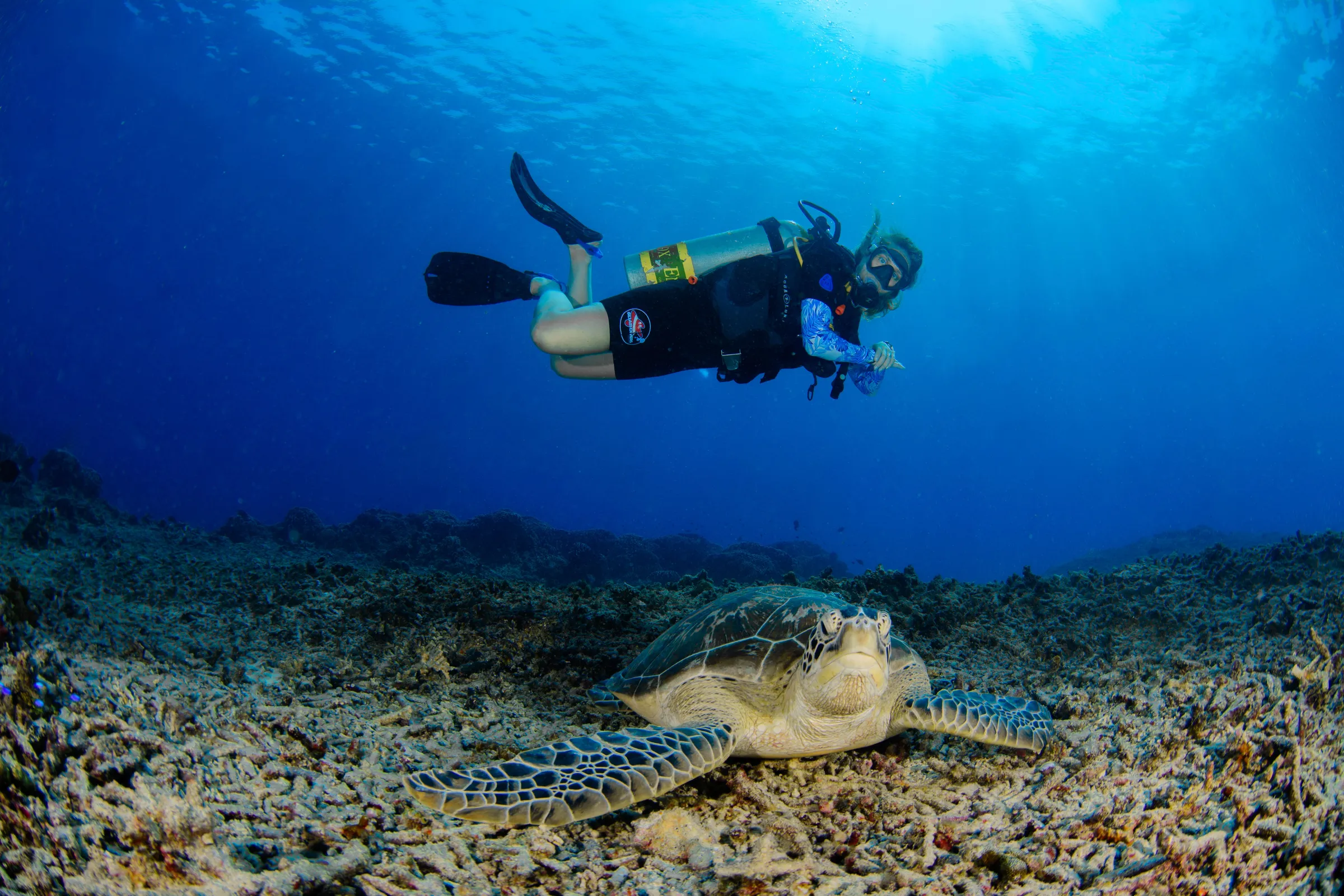
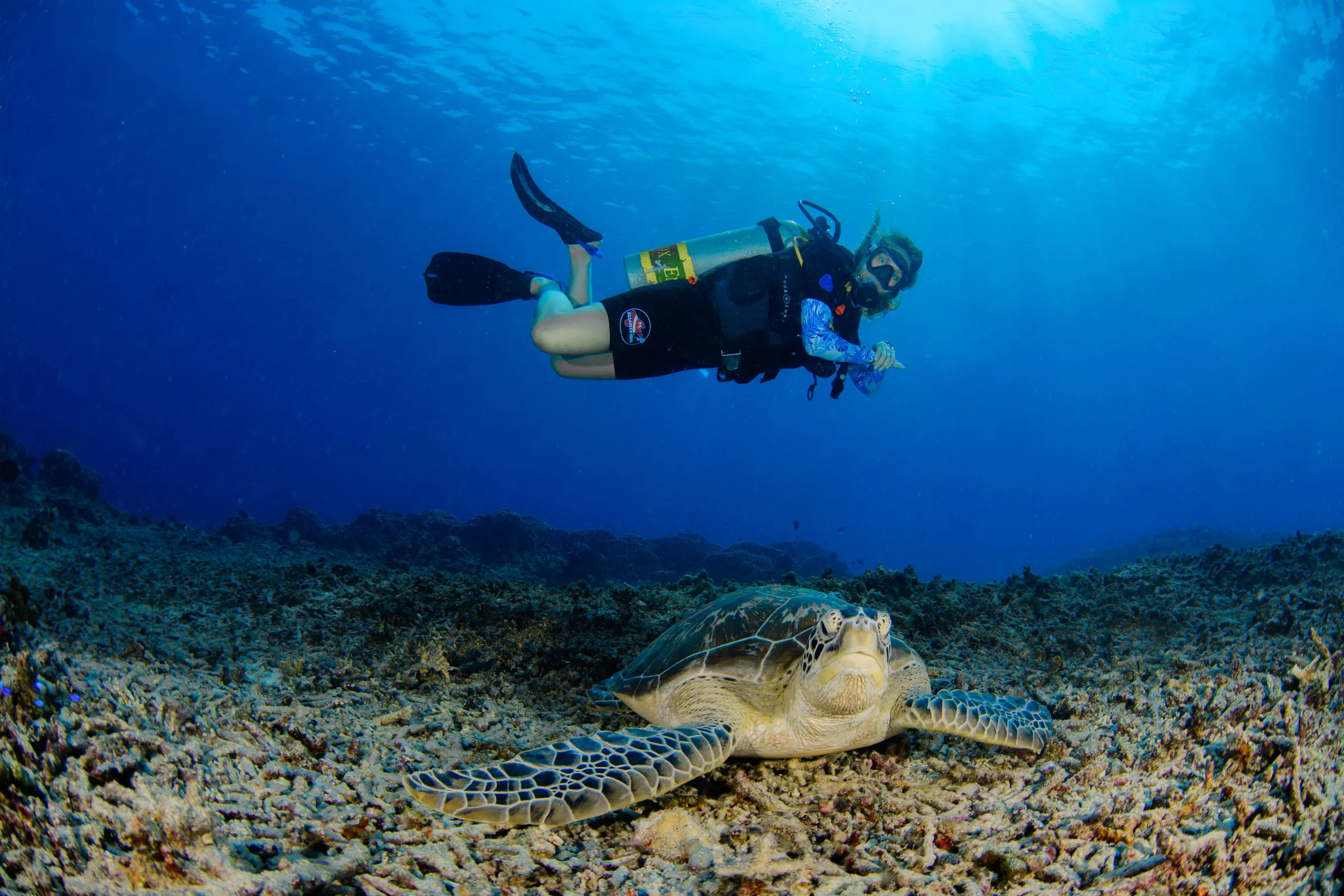
Nicht anfassen. Das Anfassen von Schildkröten stresst sie, kann die schützende Schleimschicht auf ihrer Haut stören und ist nach indonesischem Naturschutzrecht illegal. Es ist auch der schnellste Weg, ein entspanntes Tier in eines zu verwandeln, das bei jedem Anblick eines Tauchers flieht. Wir beenden einen Tauchgang vorzeitig, wenn ein Gast eine Schildkröte greift.
Nicht verfolgen. Eine Schildkröte, die zum Atmen auftauchen will, wird auftauchen. Wenn sie nach oben schwimmt, geh aus ihrem Weg und lass sie über dich hinwegziehen. Ihr zur Oberfläche zu folgen verwandelt eine fünfminütige Begegnung in eine dreisekündige.
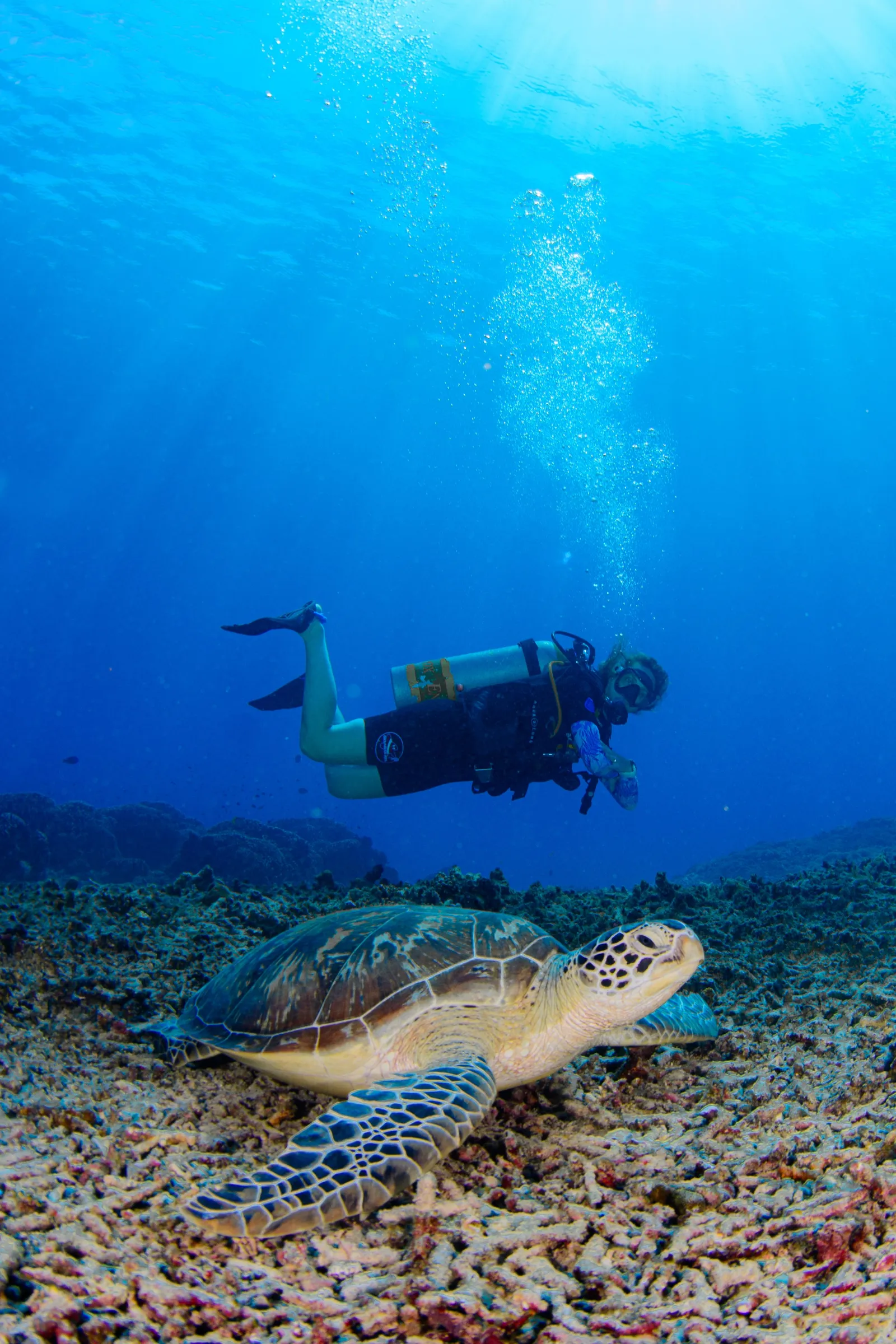
Nähere dich von der Seite, nicht von oben. Komm auf Tiefe rein, verlangsame deine Flossenschläge und lass die Schildkröte dich zu ihren eigenen Bedingungen wahrnehmen.
Bleib horizontal. Je neutraler deine Haltung im Wasser, desto länger bleibt sie. Meistere deine Tarierung, bevor du Spots wie Turtle Heaven besuchst; am Riff schleifen oder Sediment aufwirbeln beendet die Begegnung für die ganze Gruppe.
Ein geduldiger Taucher, der einer grünen Schildkröte zwölf Minuten beim Weiden zusieht, sieht mehr als ein aufgeregter Taucher, der vier Sekunden bekommt, bevor sie flieht. Die langsamste Annäherung produziert jedes Mal die längste Begegnung.
Naturschutz
Beide Arten gelten laut IUCN als gefährdet. Nisteinstrände auf Gili Meno und Gili Air werden in der Hauptnistsaison von Juni bis September überwacht. Wenn du frische Spuren oder eine Nesthöhle am Strand findest — typischerweise oberhalb der Hochwasserlinie, der Sand in einem kreisförmigen Bereich von etwa einem Meter aufgewühlt — lass alles genau so, wie du es gefunden hast, und melde den Ort der Tauchbasis oder dem Gili Eco Trust.
Die wirksamste Naturschutzmaßnahme für einen besuchenden Taucher ist unkompliziert: nicht anfassen, nicht verfolgen und der Tauchbasis, wenn du wieder auf dem Boot bist, beschreiben, was du gesehen hast und wo. Sichtungsmeldungen bauen die lokale Wissensbasis auf, die Patrouillenentscheidungen leitet.
Wann du kommen solltest
Ganzjährig. Die Schildkröten sind sesshaft, keine saisonalen Wanderer. Sicht und Seebedingungen sind zwischen April und November am besten, aber grüne Schildkröten sind an jedem Tauchgang dabei, unabhängig vom Monat.
Wenn das Tauchen mit Meeresschildkröten der Hauptgrund deiner Reise zu den Gili-Inseln ist — und das ist ein vollkommen guter Grund — melde dich vor deiner Anreise bei uns. Wir bringen dich zu dem Spot, der laut den Morgenberichten unserer Guides am wahrscheinlichsten liefert.