Duiklocatie
Tunang Wall
- Diepte
- 10-35m
- Niveau
- advanced
- Boot vanaf Gili Air
- 5–15 min
Tunang Wall is een van de dramatischste duiken in het Gili-gebied — een echte open-zee-muur die begint op 10 meter en verticaal afduikt voorbij 35 meter het diepe blauwe in. De pinnacle waar hij deel van uitmaakt ligt enkele kilometers ten noorden van de Gili-eilanden in blootgesteld open water, wat betekent dat deze locatie alleen toegankelijk is als weer en getijdenomstandigheden samenvallen. We draaien Tunang Wall uitsluitend bij stille tij: bij stromend tij kan deze krachtig genoeg zijn om de duik onmogelijk te maken en de boottocht oncomfortabel.
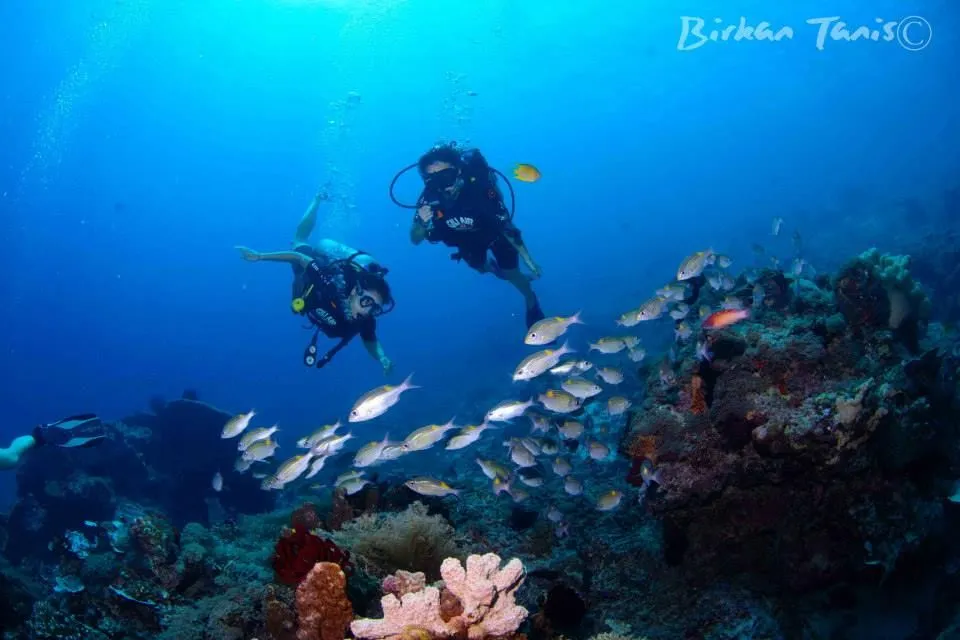
Het wandvlak zelf is uitzonderlijk. Vanaf de top op 10 meter tot de recreatieve limiet op 35 meter is hij bedekt met een opeenvolging van gorgonen-zee-waaiers, zwarte-koraal-bomen en grote vat-sponzen die uit elke richel en spleet groeien. Het verticale profiel betekent dat de koraalgemeenschappen merkbaar veranderen met de diepte — de ondiepere delen herbergen dichte harde-koraal-tuinen en scholen fuseliers, terwijl de diepere delen overgaan in de waaier- en zwarte-koraal-formaties die gedijen in het koelere, voedselrijke opwellende water van onderen.
Tussen 18 en 25 meter bevindt zich een gevestigde rifhaai-schoonmaakstation. Witpunt-rifhaaien staan hier in rij om parasieten te laten verwijderen door schoonmaakvissen — op een goede dag kunnen vijf of zes haaien worden geobserveerd bewegingloos rustend terwijl ze behandeld worden, een opmerkelijk gedrag om onder water te zien. Adelaarsroggen zwemmen in het open water voor de muur, en zeeslangen jagen langs het wandvlak. Trevally en scholen fuseliers vegen voorbij in strak georganiseerde groepen.
De locatie is Advanced-niveau en niet voor de bangerikken. Stroming kan snel versnellen op deze blootgestelde locatie, en bootomstandigheden kunnen snel veranderen. Ervaren duikers die hier komen worden beloond met enkele van de meest dramatische landschappen en meest geconcentreerde groot-dier-ontmoetingen van de regio.
Duikertips: Daal dicht bij de muur af en gebruik hem als referentie gedurende de hele duik — open-water-desoriëntatie kan een probleem zijn bij blootgestelde pinnacles. Check luchtverbruik zorgvuldig; de afgelegenheid van de locatie betekent dat er geen kans is om dichtbij de boot boven te komen als je weinig lucht hebt. Neem een reef-hook mee als je er een hebt — kort vasthaken aan een leeg, dood-koraal-gebied bij het schoonmaakstation laat je de haaien observeren zonder tegen de stroming te vechten. Kom vroeg boven en signaleer de boot ruim voor je uit het zicht drift.
Hier waargenomen onderwaterleven
- Witpunt-rifhaaien (schoonmaakstation)
- Adelaarsroggen
- Scholen fuseliers
- Reuzen-trevally
- Zeeslangen
- Gorgonen-zee-waaiers
- Zwarte-koraal-bomen
- Grote vat-sponzen